
THE PACIFIC NORTHWEST'S ORIGINAL GRAIN
Yamas Blue™ Wheat
A honeyed, golden heritage wheat, grown in the region since the 1820s.
FLAVOR
Honeyed.
Buttery.
Hints of Corn.
Described by millers as having a honeyed sweetness from its golden white flour. Carries an old-world charm.
BEST FOR
Flatbreads
Frybreads
Pastries
Artisan loaves
QUICK FACTS
Type
Soft white wheat
Protein
Not yet tested
Available as
Not yet available
Learn About the First Grain Grown in the Pacific Northwest
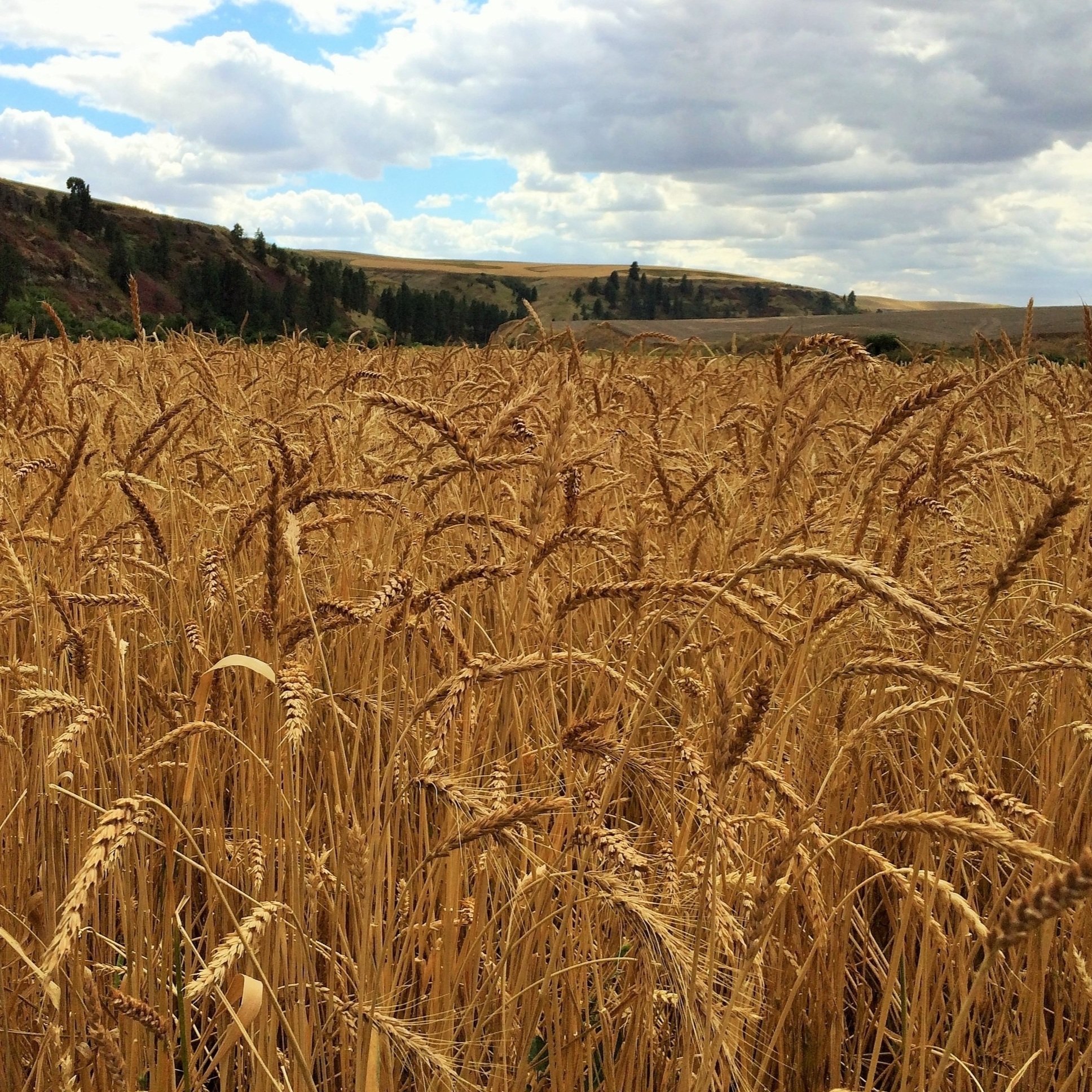
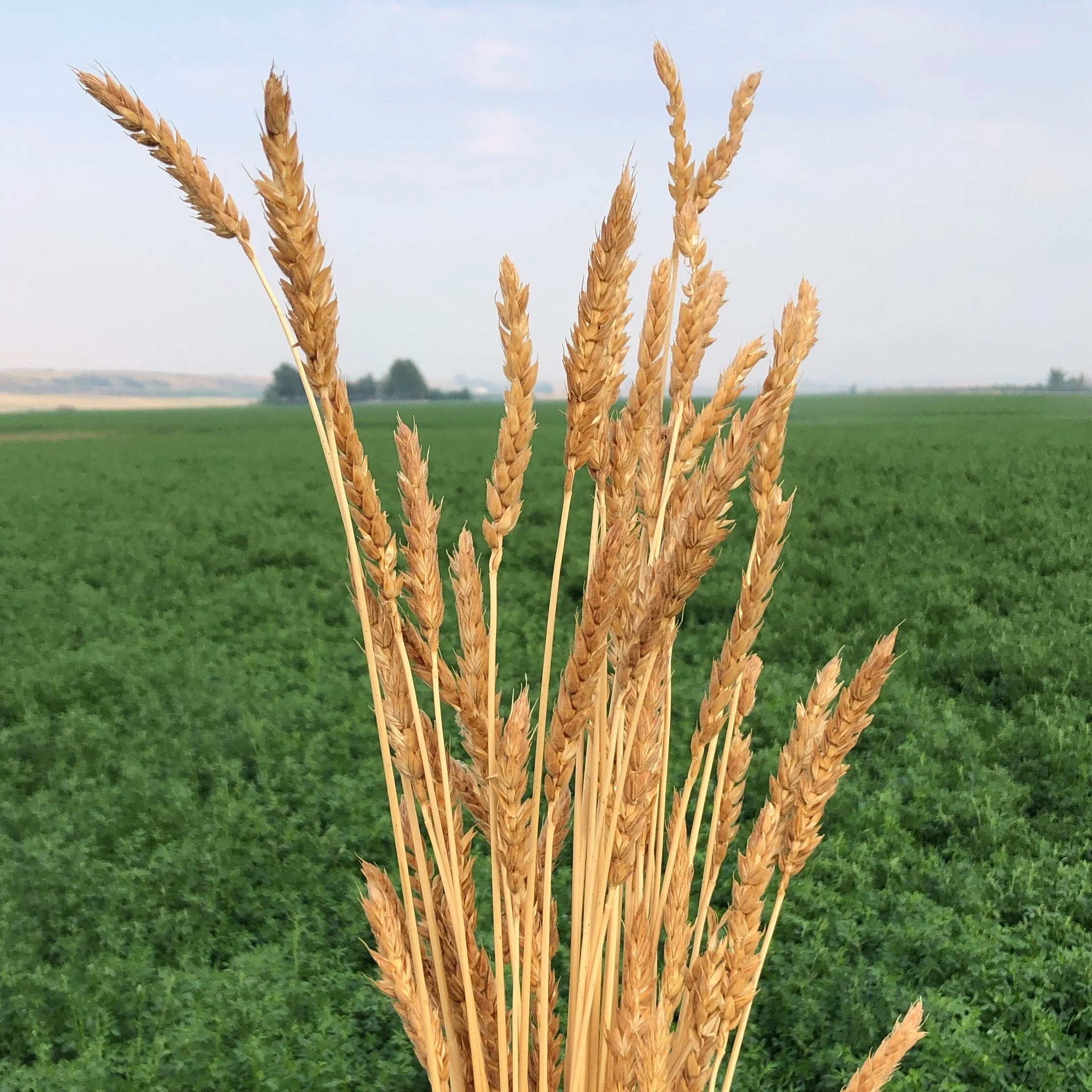
Palouse Heritage Yamas Blue™ Wheat is the Pacific Northwest’s original cereal grain and is described by millers as possessing a “honeyed sweetness from golden white flour.” Bakers who have worked with Yamas Blue™ quickly recognize its similarities to White Sonora, producing exceptionally soft, extensible dough with a buttery, lightly sweet flavor and a delicate hint of fresh corn that shines in flatbreads, pastries, tortillas, and artisan loaves.
This nutritious soft white English Lammas grain, also known as White Lammas, was widely used for flatbreads, frybreads, and pastries. It was introduced to the region in the 1820s by the Hudson’s Bay Company and raised in the shadow of the Blue Mountains along the Walla Walla River and at Forts Colville, Vancouver, and Nisqually. The region’s earliest farmers were Native Americans and frontier traders in these areas who worked together long before the pioneer era to provision local populations.
For roughly the next 20–30 years, Yamas Blue™ was the primary wheat grown in the region. It helped feed Hudson's Bay Company employees, native communities, early settlers, and even Russian Alaska, which imported flour and wheat from the Columbia District. Later introductions of the variety under the name Pacific Bluestem came from Australia. However, by the late 1800s, farmers wanted varieties that yielded more, resisted lodging, matured more uniformly, and worked better with newer farming methods. Consequently, Yamas Blue™ gradually disappeared from commercial production and was eventually replaced by modern breeding lines.
Most people assumed the original Hudson's Bay White Lammas had been lost forever. Sometime around 1916, a farmer in Oregon's Willamette Valley submitted a sample of this wheat to what became the USDA's national germplasm collection. That single accession was preserved, which was incredibly fortunate because, as far as researchers know, that one Oregon sample became the surviving representative of the original Yamas Blue™ grown in the Pacific Northwest. USDA curators maintained the seed through periodic regeneration so it remained viable for future generations.
This grain is currently undergoing increase trials. We hope to have it available for sale in the future.
Our Commitment to Transparency: The fields where this grain was cultivated had received glyphosate applications in previous growing seasons. Although remaining residues are expected to have largely degraded, we cannot rule out the possibility of trace amounts. We believe in transparency and are committed to growing grains with the highest standards of purity and environmental stewardship.
References
Jones, Stephen S., Murray, T. D., and Allan, R. E. History of Wheat Breeding in Washington. Washington State University Extension Technical Bulletin TB1083. 2021. Available at: https://s3.wp.wsu.edu/uploads/sites/2616/2021/03/tb1083.pdf
Oregon Encyclopedia. Wheat Farming in Oregon. Oregon Historical Society. Available at: https://www.oregonencyclopedia.org/articles/wheat-farming-in-oregon/
Halloran, Amy. White Lammas Wheat Revival (blog posts and field notes). Available at: https://amyhalloran.net/news-2/page/3/
United States Department of Agriculture, National Plant Germplasm System (NPGS). GRIN-Global Germplasm Resources Information Network. National Laboratory for Genetic Resources Preservation. Available at: https://npgsweb.ars-grin.gov/gringlobal/search