
Whole Grain White Sonora French Bread
Best with:White Sonora Wheat
French Loaf á la Julia Child
Thanks to our friend Rob of Pullman, WA for sharing this recipe. We’re publishing it here as a guest post. Enjoy!
About This Bread
Except for the wonderful whole grain flavor, the texture and crust of this bread makes it seem that it was made from white flour instead of whole wheat!
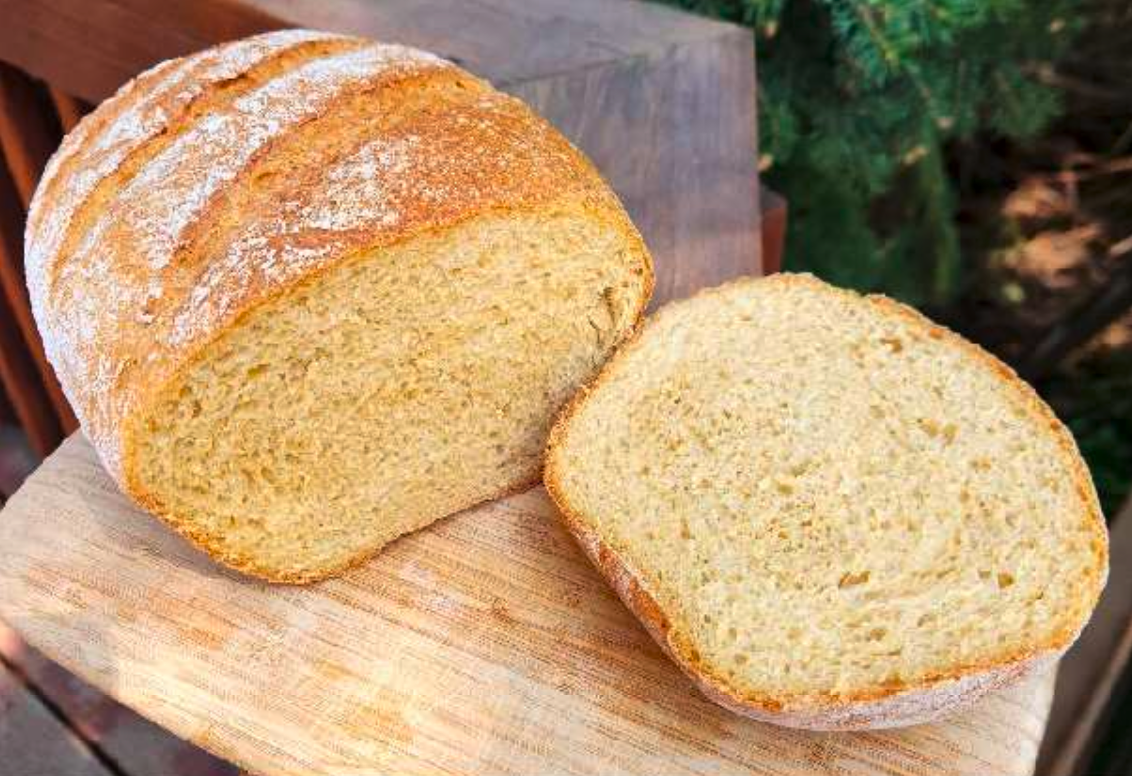
In the second volume of her iconic cookbook, “Mastering the Art of French Cooking”, Julia Child provides a detailed procedure for making French Bread, with the caveat that one cannot actually reproduce the flavor and texture because French flour is lower in protein and not milled as finely as the commonly available flours in North America. In this video Julia is demonstrating making French bread along with a segment of her session in a French bakery showing how the dough behaves and how to form loaves: https://www.dailymotion.com/video/x2gtlad.
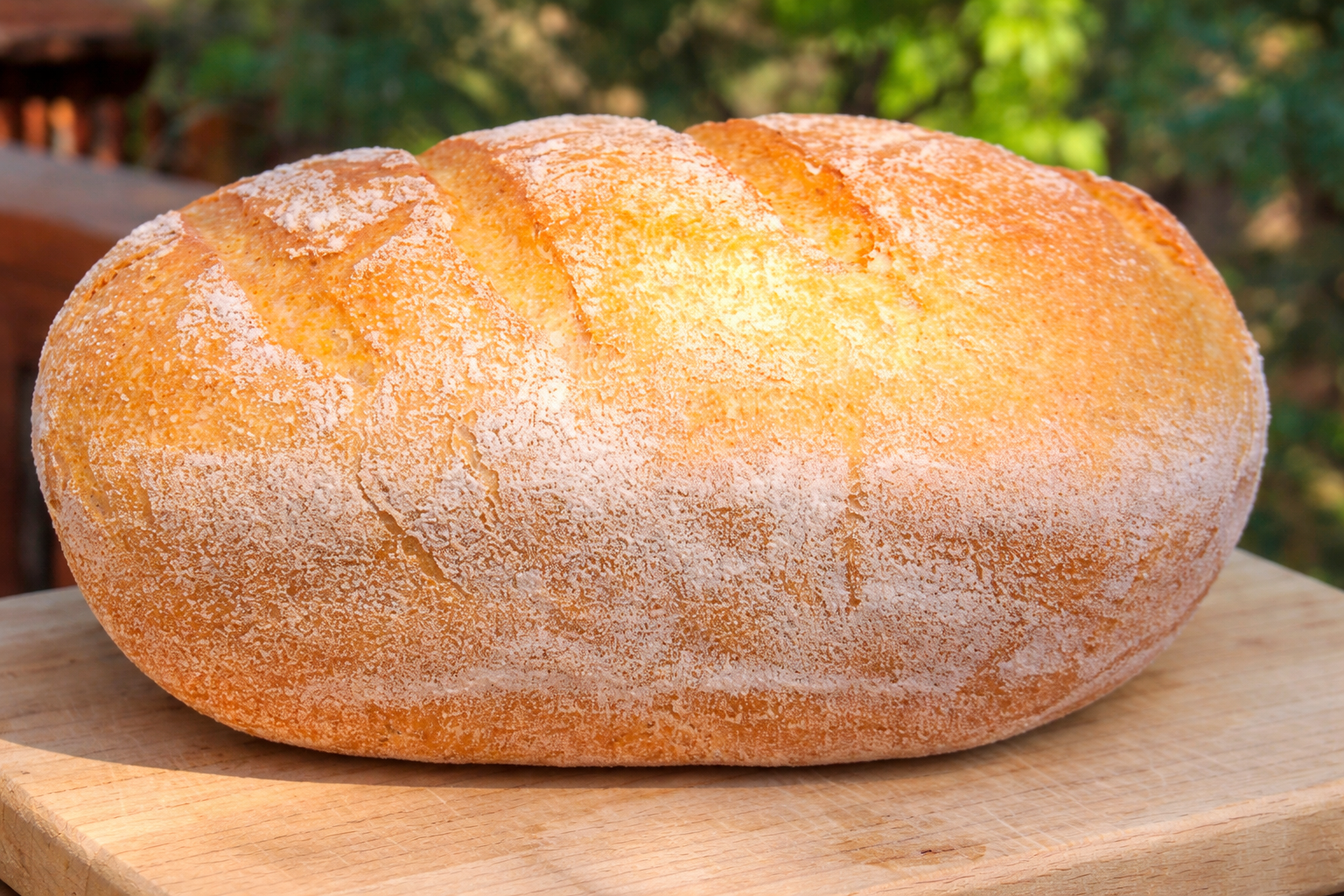
Before I purchased a Mockmill* attachment for my Kitchen Aid* stand mixer I had read the aforementioned section about making French bread in Julia’s cookbook many times, but, while interesting to know, it did not signify much because there was no chance of getting any French flour. However, recently I had another reason to consult her cookbook, and when my eyes fell on the section about French bread I immediately thought that since I had a bag of White Sonora soft white wheat berries, which would be low in gluten, and that the flour that I milled would be coarser than commercial all-purpose flour, I decided to try to follow Julia’s recipe, even though I knew that soft wheat flour is not supposed to be good for yeast raised breads.
In Julia’s recipe she used 3 ½ cups of all-purpose flour (measured by the scoop and level technique), which was judged to be about one pound of flour, and 1 ½ cups of water plus 1/3 cup of water for proofing the yeast. A quick calculation showed that in baker’s percentages this was at least 90% hydration, thus a very slack dough. Later, using the King Arthur Equivalency Tables and calculating her proportions more carefully, her dough was much closer to 100% hydration.
So, using Julia’s method as a guide I have developed the following recipe:
Ingredients
450g White Sonora soft white berries, ground on the finest setting using the Mockmill.
Note: I tried several other soft white wheats; they produced loaves that were inferior in flavor and texture to White Sonora.
Add:
2.3g Ascorbic acid (vitamin C); 0.5% of the weight of the flour. Vitamin C is a yeast enhancer.
4.5g Instant Yeast; 1.0% of the weight of the flour.
13.3g Salt; 2.95% of the weight of the flour. I use Redmond Real Salt*
Mix the dry ingredients together and then add:
394g of boiled tap water (tepid temperature); 87.5% the weight of the flour. Boiling the water removes microorganisms and chlorine; it is superior to using plain tap water or bottled water.
Method
1. Mix & Knead
Start kneading the dough on the stand mixer using the paddle blade on speed 1 until it becomes smooth, then switch to a spiral dough hook and knead on speed 2 until the dough cleans the sides of the mixing bowl; this will take 15-20 minutes. The dough will still be somewhat sticky.
Transfer the dough to a lightly floured surface and gather it into a tight ball. Place the ball in a lightly oiled bowl, close the bowl with a plate, and then cover it with a towel. Let the dough rise until it at least more than doubles in bulk. Depending on the temperature, this can take 2-3 hours.
2. Prepare the Clay Baker
In the meantime, take the cover of a clay baker, such as from a 1.5 qt. Eurita* covered baker, which makes a shorter compact loaf (pain boulot), or from a Sassafras Superstone® covered baker*, to make a longer more cylindrical loaf (pain bâtard), and fill it with water. This is best done by placing the cover upside down in the sink. Allow the cover to soak until just before using it in the oven.
3. Second Rise
After the first rise, turn the dough out onto a lightly floured surface and deflate it. Fold the dough over around itself repeatedly so as to make a tight ball. The dough will be much easier to handle and less sticky at this stage.
Place the dough ball in a lightly oiled bowl, cover it with a plate, and then cover it with a towel. Let the dough rise until it doubles in bulk. This typically takes about 1 hr.
Turn on the oven to 450 °F and place the lower half of the clay baker in the oven.
4. Final Shaping & Proof
After the second rise transfer the dough to a lightly floured surface and gently, partially, deflate it. Pinch off any large gas bubbles on the surface.
With the side of one hand press a crease in the dough and then fold it together. Repeat this folding once more, elongating the dough to the appropriate size depending on the chosen baker.
Pinch the seam carefully to seal the dough together, and then place it seam side up in a floured proofing basket of the size appropriate for the chosen baker. Cover with a floured cloth and let it rise until the seam begins to show a little separation; the dough will increase by perhaps 50%. Do not overproof.
5. Bake
To bake, first empty the water out of the cover, but do not dry it.
Open the oven (use gloves or oven mitts when touching the hot baker) and tip the dough from the proofing basket into the hot bottom half of the baker so that the seam side is down.
Using a baker’s lame, razor blade, or serrated knife, score the dough, then place the soaking wet cover onto the baker. All of this water will quickly turn to steam producing the delightful crust.
Bake covered for 60 minutes, then remove the covered baker from the oven and tip the loaf out onto a rack to cool.
Note: the clay baker and cover are sensitive to thermal shocks; do not set them on a surface to cool, rather set them on a rack or sticks of wood until they are cool enough to handle.
If you can wait, allow the loaf to cool until it is barely warm before cutting into it. Enjoy!
Acknowledgements
Rob R., Pullman, WA, May 2025
Photos by his daughter, Bela R.
*The author is not sponsored by or sponsoring any of these products.
