
Heritage Landrace Grains: The “Sweet Spot” Between Ancient Grains and Modern Wheat
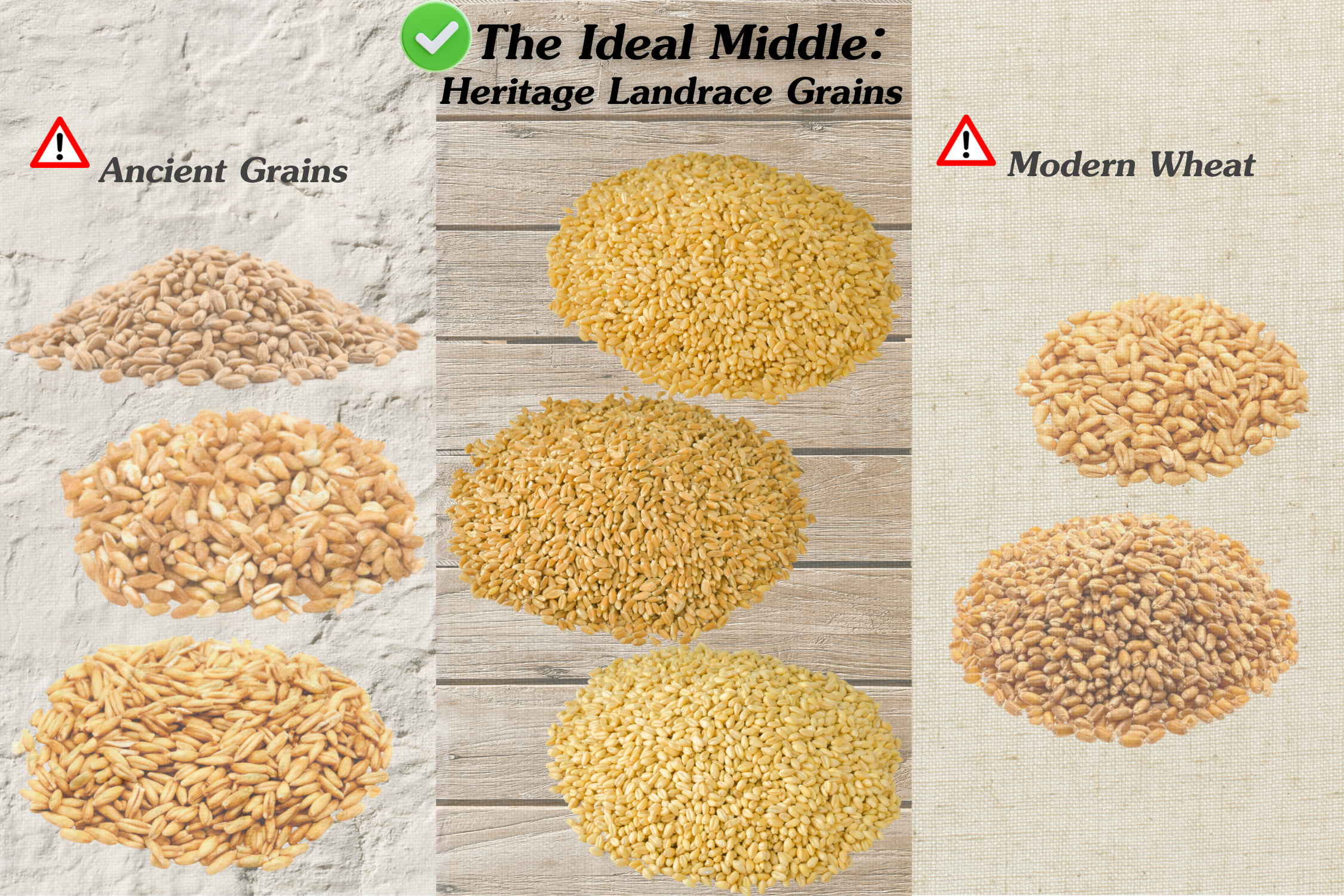
When bakers start exploring alternatives to modern wheat, they often hear about ancient grains like einkorn, emmer, and spelt. Others stick with conventional modern wheat because it’s familiar and predictable to bake with. At Palouse Heritage, we focus on a better approach that sits right between those two extremes: heritage landrace grains.
Our heritage landrace wheats and barleys occupy the ideal middle ground between ancient grains and modern wheat. These grains, like White Sonora, Turkey Red, English Redhead, and Purple Egyptian®, preserve the depth, flavor, and nutritional richness people seek in ancient grains, while remaining familiar, functional, and approachable for today’s bakers and millers.
What Are Heritage Landrace Grains?
The terms “heritage,” “landrace,” and “ancient” are often used interchangeably, but they describe important and distinct categories of grain.
Heritage (or heirloom) grains is a broad term that includes grain varieties grown before the mid-20th century, prior to the widespread adoption of industrial breeding focused on chemical inputs and maximum yield.
Landrace grains are traditional, regionally adapted populations of wheat, barley, oats, rye, and other cereals that developed naturally over centuries. Rather than being engineered in laboratories, they evolved in specific places, shaped by local soils, climates, and farming practices. Most Palouse Heritage grains fall into this category.
Ancient grains include both early landraces and even older “pre-wheat” species such as einkorn (Triticum monococcum), emmer (Triticum dicoccum), and spelt (Triticum spelta). These grains belong to different branches of the wheat family tree and often retain indigestible hulls that must be removed before milling.
What distinguishes our heritage landrace wheats is this critical point:
They belong to the same species as modern bread wheat (Triticum aestivum) —but were developed long before industrial breeding reshaped wheat for yield and uniformity.
This biological continuity is what makes them such an effective and meaningful “sweet spot” between ancient and modern grains.
Ancient Grains vs. Modern Wheat: Why the Middle Matters
Ancient grains are rightly celebrated for their complexity, mineral density, and historical significance. However, they can be difficult to work with. Their gluten structures behave differently, hydration requirements vary widely, and recipes often need to be re-engineered from the ground up.
Modern wheat, by contrast, was bred for consistency and scale. Shorter stalks, uniform kernels, and predictable performance made it ideal for industrial food systems, but this came at the expense of flavor diversity, mineral content, soil health, and resilience. Modern breeding has also altered the gluten structure in wheat[1], which might contribute to the rise in digestive sensitivities some people experience with modern wheat.
For many bakers and millers, this creates a false choice: quality and history on one side, functionality and familiarity on the other. Heritage landrace grains resolve that tension.
The Ideal Middle for Bakers and Millers
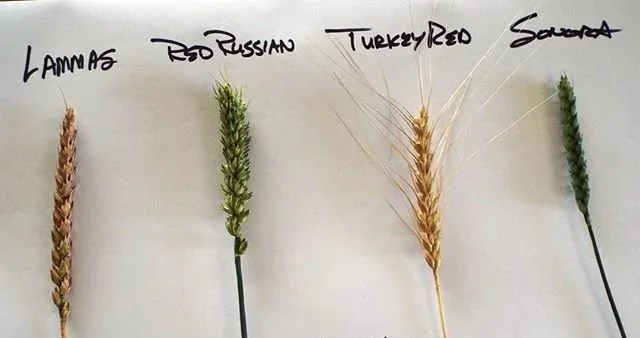
Select heritage landrace grain samples from early Palouse Heritage growing trials
Because heritage landrace wheats are still Triticum aestivum, they typically behave like wheat is expected to behave in the kitchen and bakery. Dough development feels familiar. Fermentation is predictable. Recipes translate more naturally from modern wheat formulas.
At the same time, these grains retain qualities that modern wheat has largely bred out.
Bakers and millers working with heritage landraces often notice:
Richer, more distinctive flavors, varying by variety and region
Greater nutrition from mineral diversity, supported by deeper root systems [2]
Improved expression of terroir, especially in fertile regions like the Palouse
Exceptional performance in long fermentation, including sourdough
In practical terms, heritage landrace grains offer much of what draws people to ancient grains without the steep learning curve. They are neither ancient curiosities nor industrial commodities. They are a natural bridge between ancient grains and modern wheat.
Rooted in History, Adapted to Place
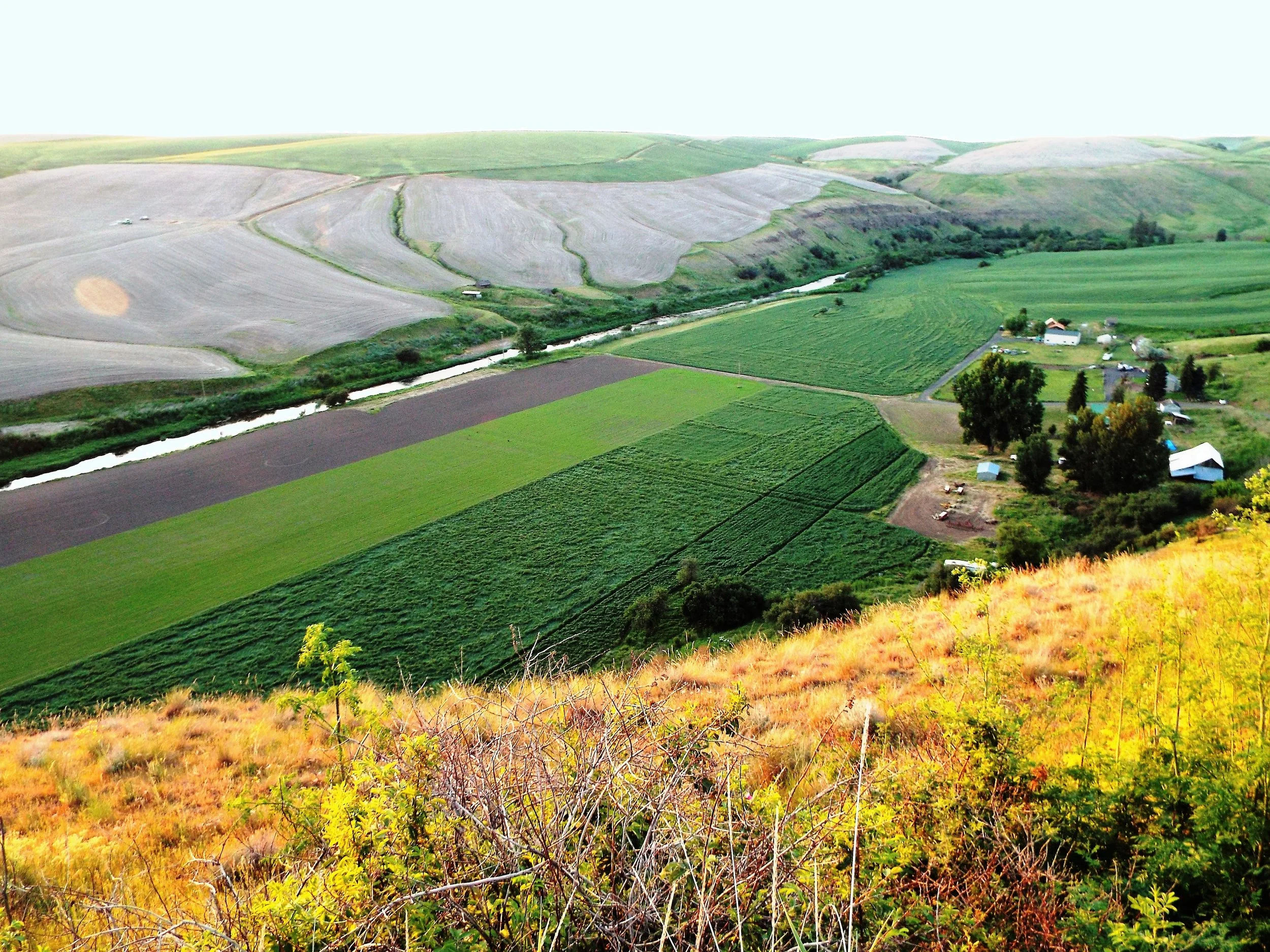
Growing multiple heritage landrace grain plots at our Palouse Colony Farm
The heritage landrace grains we grow at Palouse Heritage are not theoretical categories. They are varieties that traveled with early farmers, fur traders, missionaries, and settlers—grains like White Sonora, Turkey Red, and historic barleys that helped shape American agriculture.
Many of these varieties were grown in the Pacific Northwest as early as the 1850s, when the Palouse emerged as one of the world’s premier dryland grain regions. Over time, industrial agriculture displaced this diversity with a narrow set of modern wheats that were conventionally bred by scientists to optimize for yield rather than flavor or resilience.
By restoring heritage landrace grains, we are reconnecting modern kitchens with the agricultural diversity and health that once sustained them.
Why We Choose the “Goldilocks Zone” of Grains
At Palouse Heritage, we don’t believe the future of grain lies in abandoning wheat or in clinging nostalgically to the past. It lies in understanding what worked for centuries and restoring it thoughtfully.
Heritage landrace grains represent the Goldilocks zone of grains: not ancient, not industrial, but deeply rooted, biologically intact, and fully relevant to modern baking. They offer flavor without intimidation, history without fragility, and tradition without compromise.
Bake with Grains That Balance History and Performance
Shop our heritage landrace wheats and barleys and experience the ideal middle ground between ancient grains and modern wheat for yourself! And don’t miss our recipes designed for landrace heritage grains. If you haven’t started milling your own flour at home, our home grain mills guide is a great resource for getting started.
Peer-reviewed studies have found that the structure and composition of gluten proteins has changed through modern wheat breeding. For example, see https://pubmed.ncbi.nlm.nih.gov/32648759/
Peer-reviewed studies have found that selected heritage and ancient wheat varieties contain higher levels of essential minerals than many modern wheats when grown under the same conditions. For example, see https://www.researchgate.net/publication/47430422_Mineral_Composition_of_Organically_Grown_Wheat_Genotypes_Contribution_to_Daily_Minerals_Intake
