
“Wheat Amidst the Tulips” — Richard’s Reflections on the 2026 WSU Breadlab Grain Gathering
By Richard Scheuerman, Palouse Heritage Co-Founder & Contributing Blogger
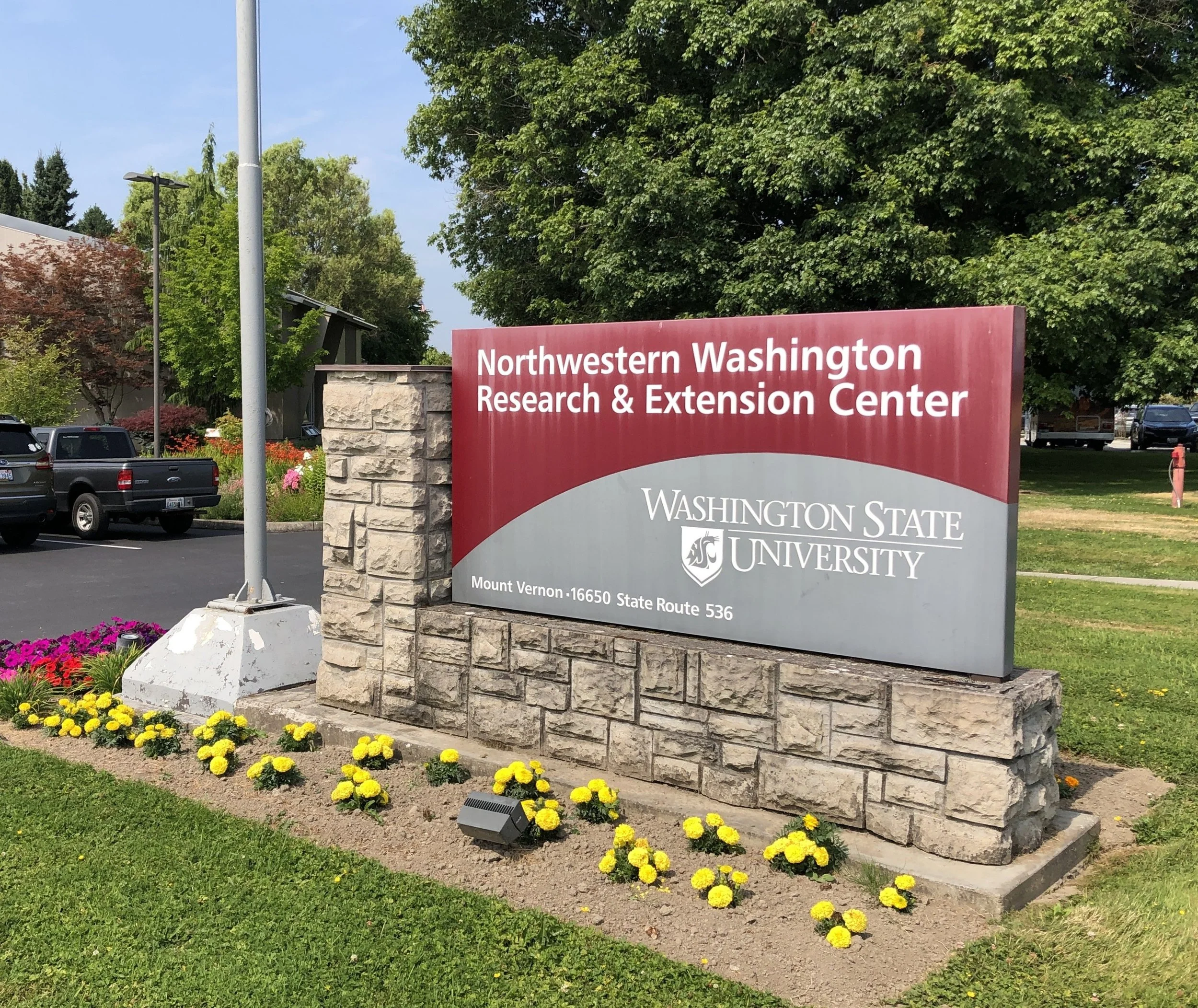
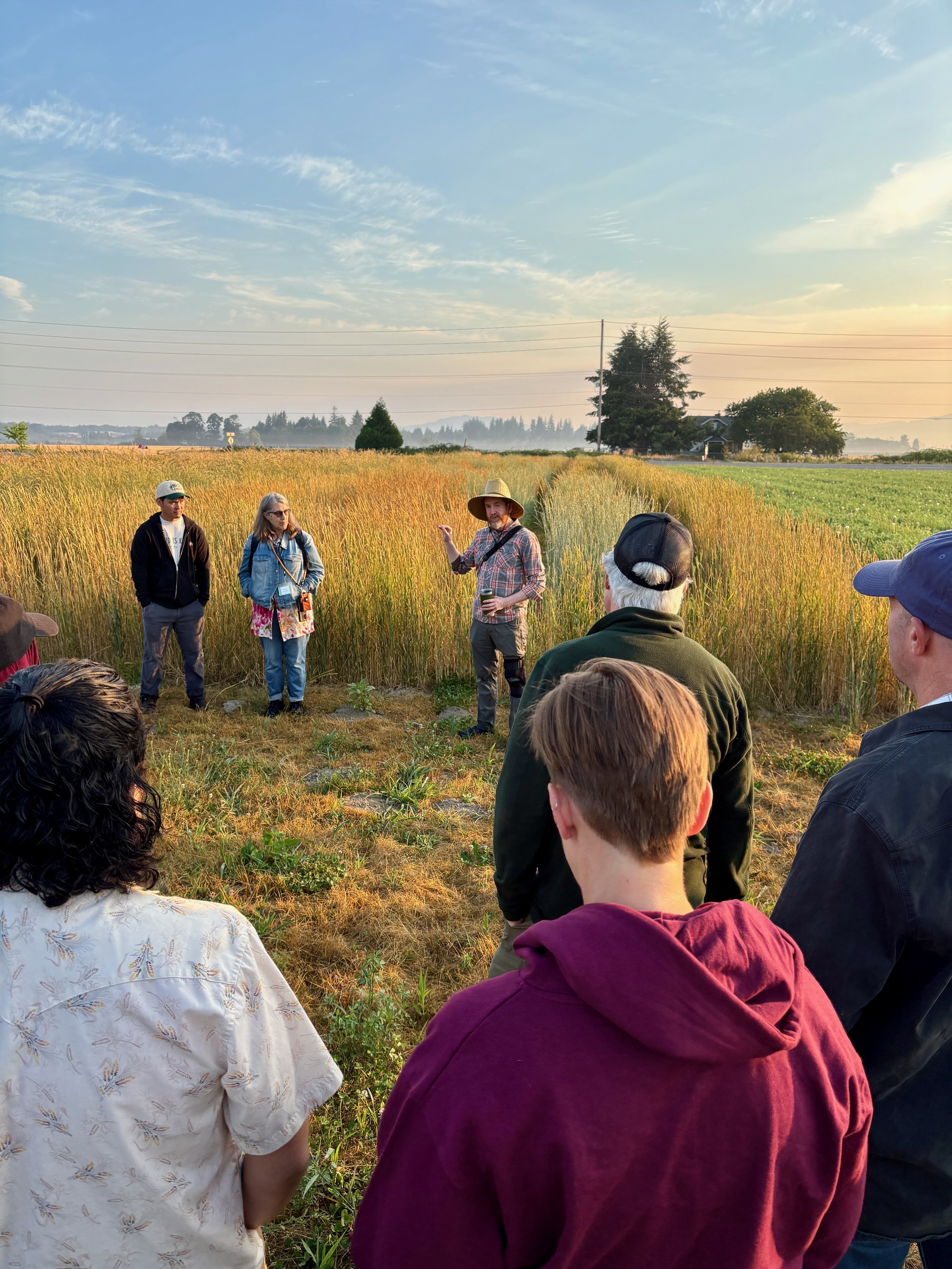
Washington’s Skagit Valley north of Seattle is a kaleidoscope of color throughout spring and summer with acres of tulips, vegetables, grains, and hay. The vibrant community of Mt. Vernon is located in the heart of the valley and for nearly a century has also been home to WSU’s Northwestern Washington Research & Extension Center. A decade ago the center launched the WSU Breadlab under the leadership of legendary grain scientist Stephen Jones, and went on to global culinary fame hosting a series of remarkable “Grain Gatherings.” These special summertime events bring together a fascinating array of folks interested in delicious, healthy food: home and commercial bakers, craft millers, grain growers, brewers, authors and artists, and folks who just like to eat! (Plenty of that goes on.)
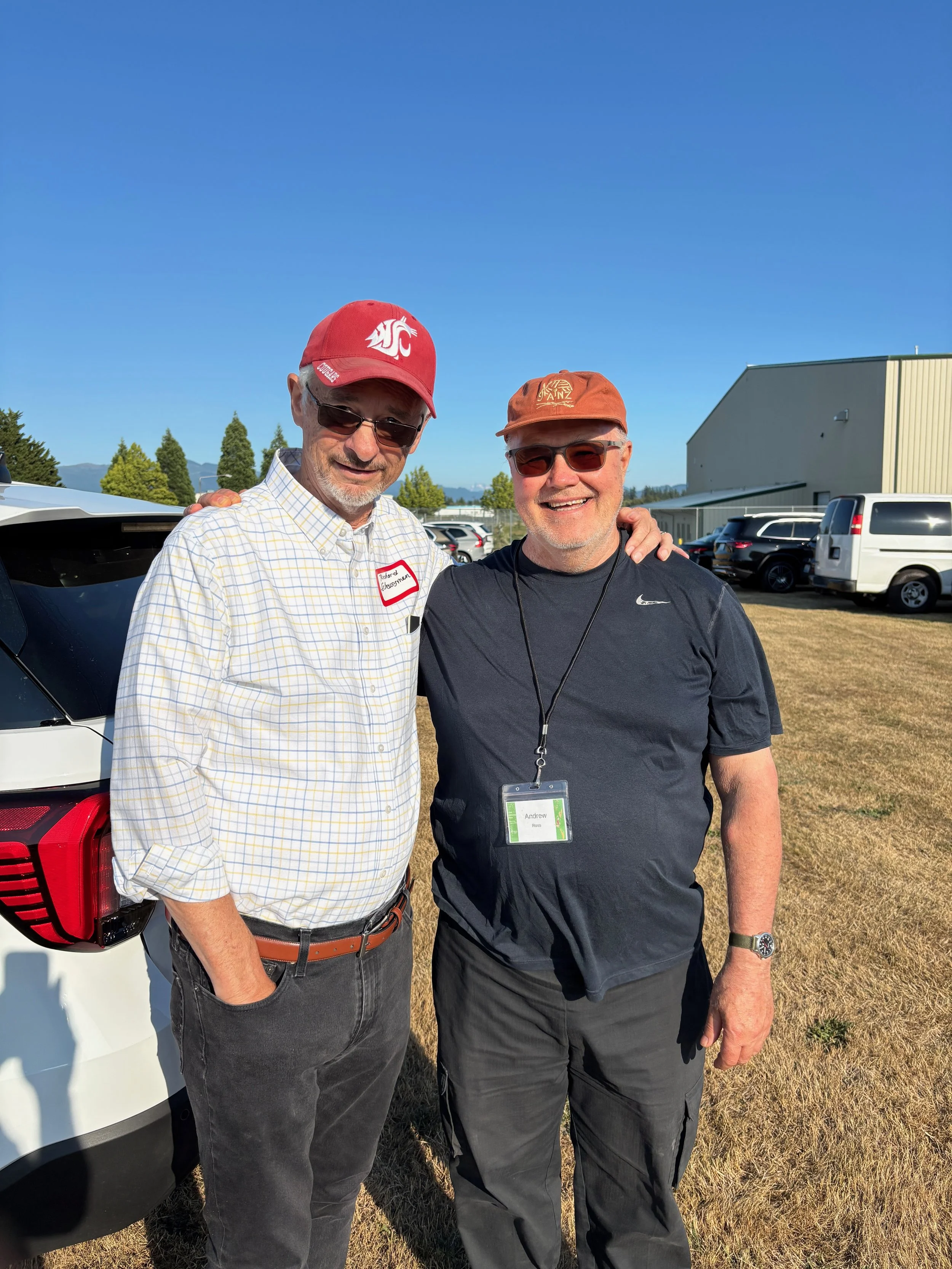
Me with Oregon State University Cereal Scientist Andrew Ross
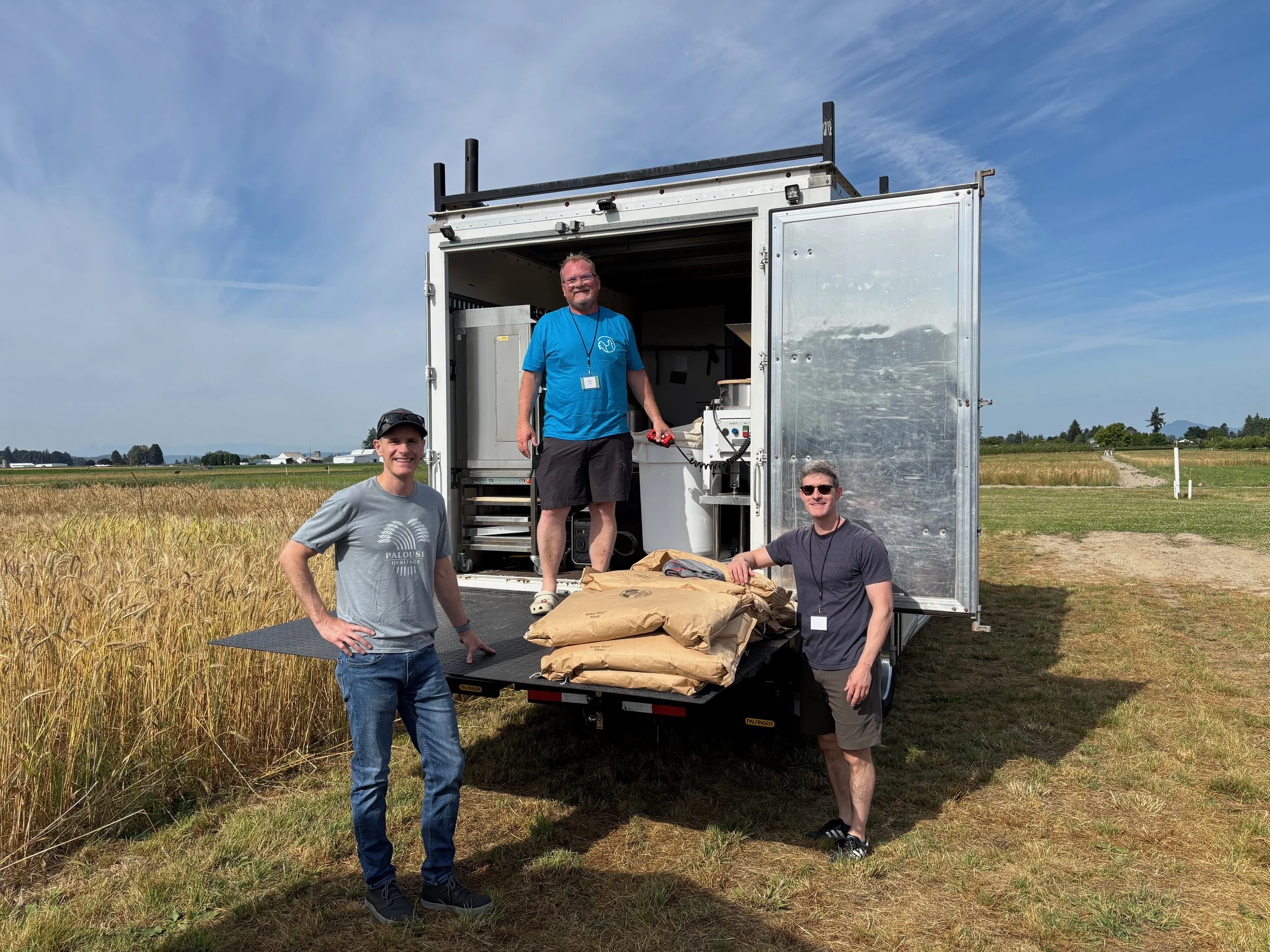
Son Karl with Marc Benoit’s mobile bakery and mill
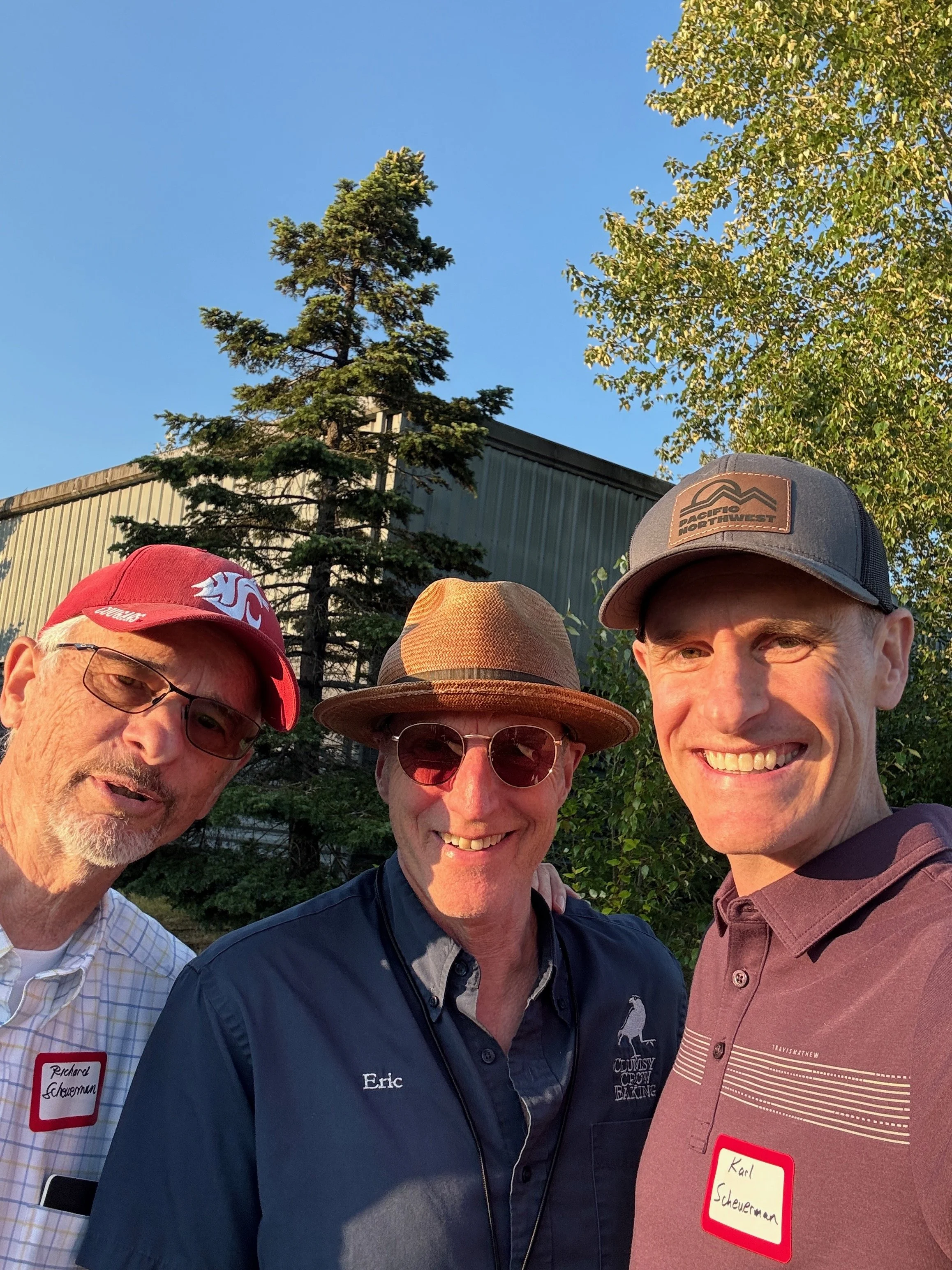
Me and son Karl with an old friend and Clumsy Crow cottage baker, Eric Sorensen
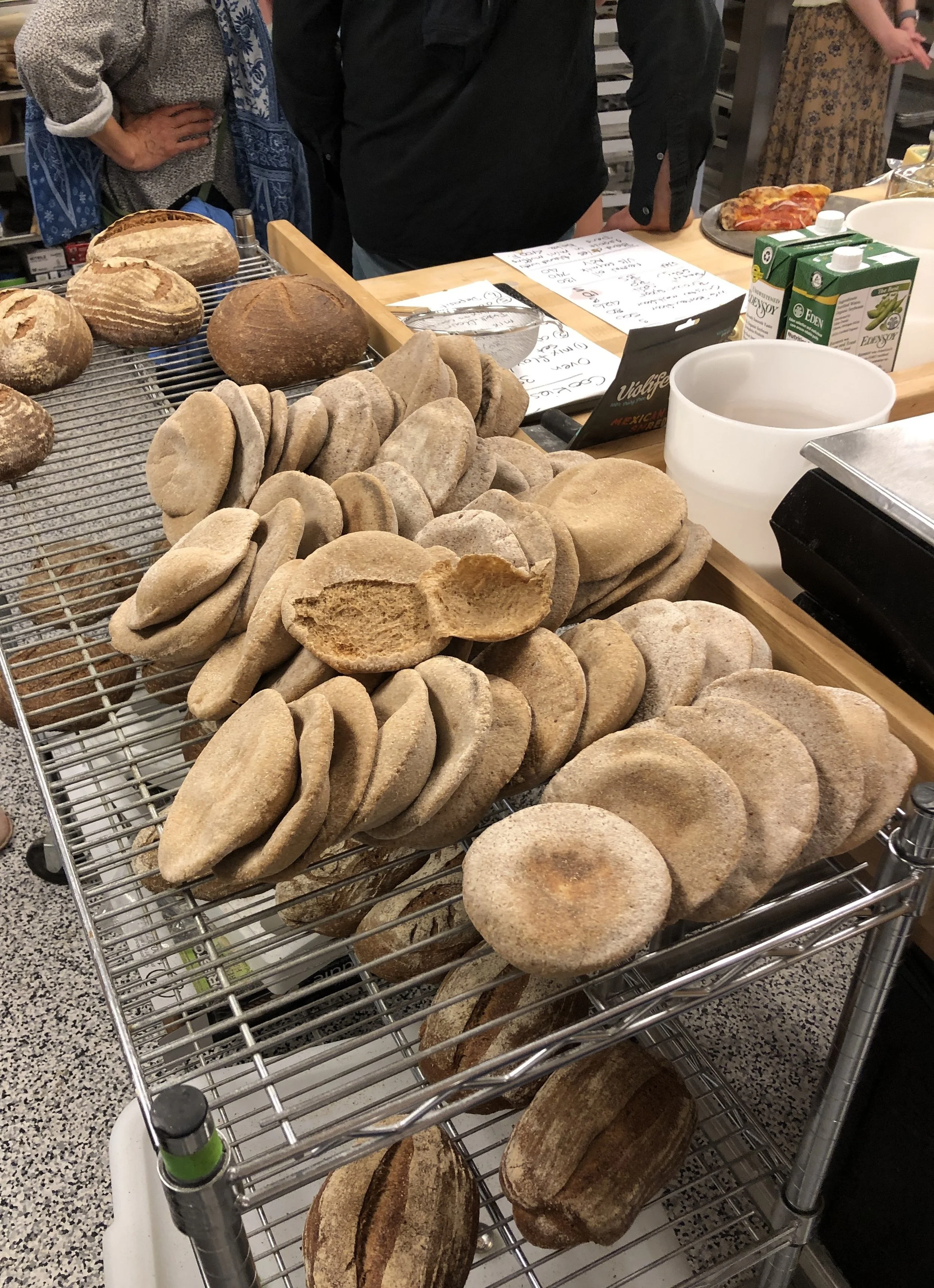
Purple barley whole grain bounty
This year’s Grain Gathering took place July 19-21 and featured another sell-out crowd with outstanding presenters organized through the capable leadership of our longtime friends Breadlab director Dr. Kevin Murphy, administrative manager Kim Binczewski, and outreach manager Janine Sanguine. The event is also a kind of reunion of special folks whose friendship and expertise has greatly benefited our Palouse Heritage endeavors through the years. Dr. Jones and crop scientist Steve Lyon were the first persons we reached out to long ago to help us start propagating the historic and nutritionally-dense heritage grains that continue to be the mainstay of our work.
WSU’s innovative Breadlab works outside of the commodity system on small grain research involving wheat, barley, perennial wheat, buckwheat, spelt, and quinoa. The principal goal is to develop better tasting, healthier, affordable baked goods and keep the value where it is produced while not pricing people out of staple foods. They then share that knowledge with the rest of the world and work with bakers, farmers, millers and others to create healthier food through whole grains.
The university has long been a leader in the development of perennial grain—the Breadlab’s most ambitious plant breeding program that involves crossing bread wheats with wild wheatgrasses. The intention is for plant regrowth after harvest without cultivation for survival over two or three winter seasons. Plant breeders also select for disease resistance, grain quality, and nutritional value. Perennial wheat offers the benefits of reduced soil erosion by eliminating the need for annual tillage, reduced labor and fuel costs, and deeper roots to capture carbon. Palouse Heritage has participated in this longterm project by providing space for test plots at our Palouse Colony Farm.
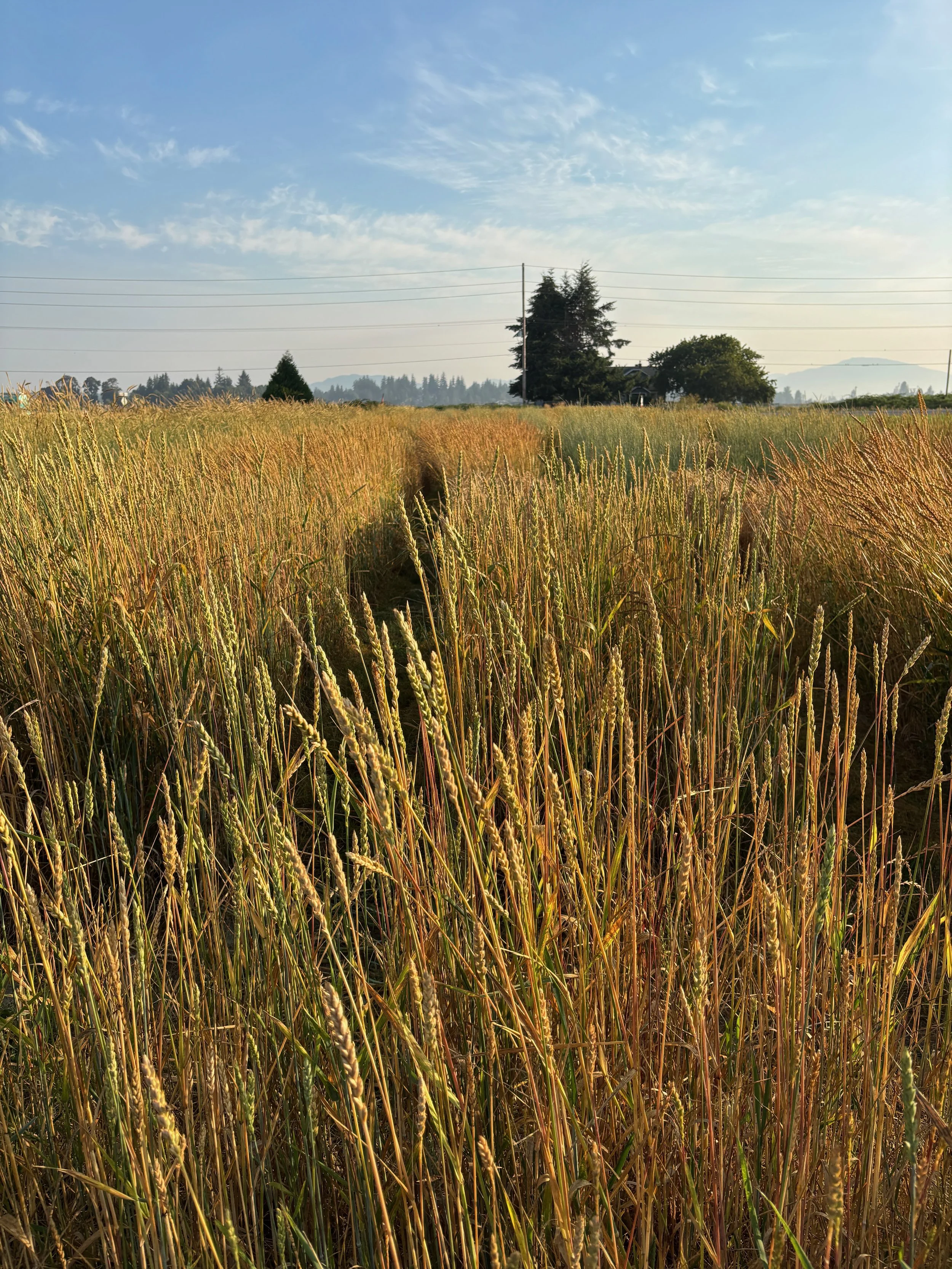
WSU perennial wheat
We also enjoyed the special conference fellowship of longtime friends Andrew Ross, Oregon State University cereal scientist and baker extraordinaire, Maryland agrarian artist Katherine Nelson, Clumsy Crow Bakery founder Eric Sorensen from Pullman, Bay area miller-baker-humanitarian Marc Benoit, and many others. Our Palouse Heritage executive director, my son Karl, was invited to take part in a growers panel and insights they shared comprise the quoted sections below that feature photos from this year’s memorable event. Thanks again to Kevin, Kim, Janine, and Team Breadlab!
Highlights from the Grain Gathering’s Panels and Presentations
Keith and Crystie Kisler, Finnriver Farm & Cidery: “I grew up in eastern Washington wheat country where the dominant approach to farming was to maximize production through high-input chemical practices for weed control and fertility. Longstanding practices prioritized production over soil health and production over human health. So we sought a better way and after some study and moving around settled on the Olympic Peninsula where we founded Finnriver Farm. We have built an organic operation through crop rotations and fruit production to promote the wellbeing of our customers and the land.
Not only have we all experienced supply chain problems here in the region and throughout the world, but uncertainty is becoming the new normal. Dystopian authors now write about unprecedented environmental challenges that have already begun to appear. The four seasons that have guided humanity since time immemorial are now being replaced by ‘firestorm, drought, and flood.’ Our challenge is to build resilience amidst the new realities through improved local food chains. In light of all this, the leading question for our day is, ‘How can we make things better for the next generation?’’’
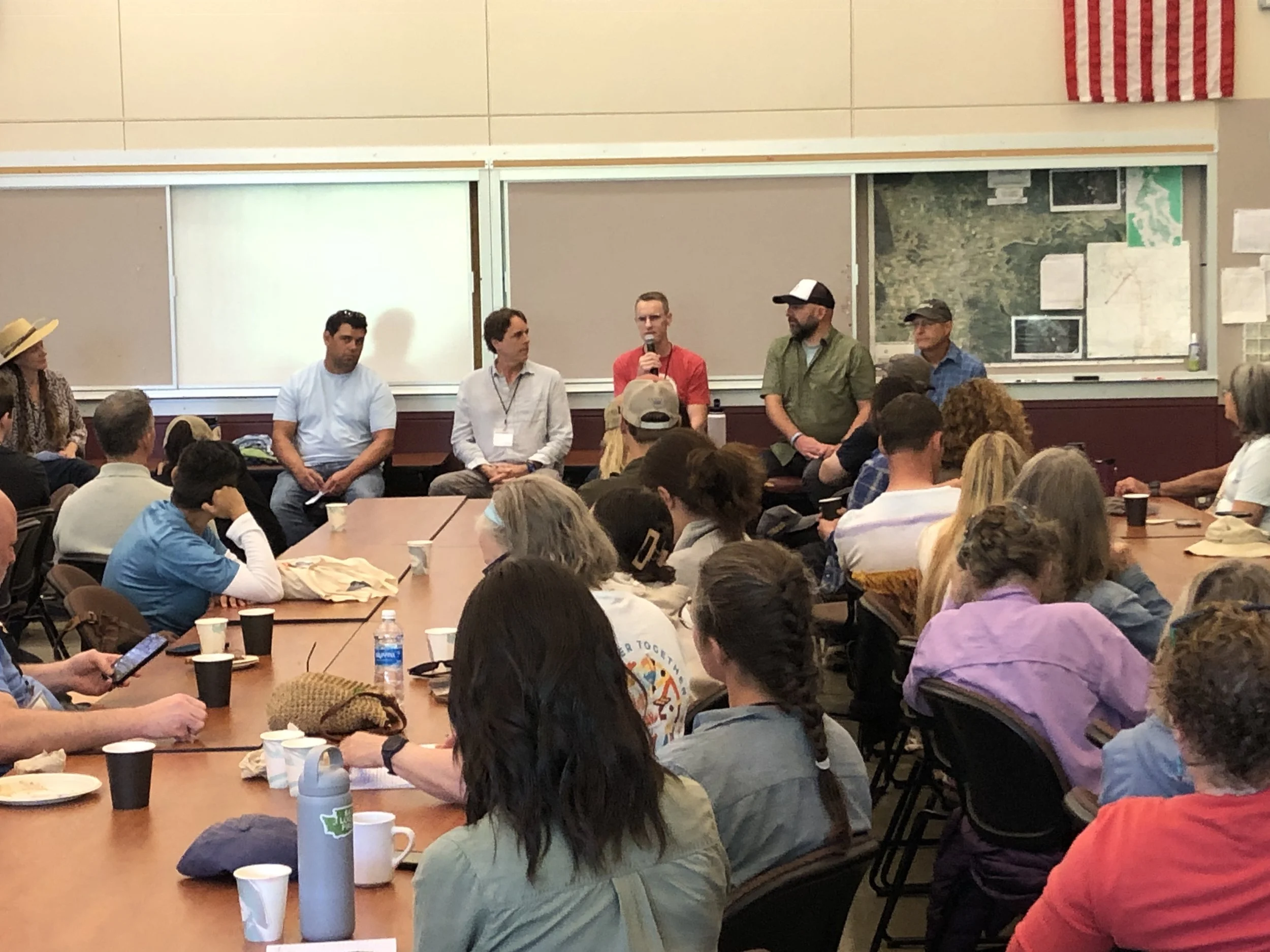
Grain Grower Panel featuring Karl (center) from Palouse Heritage
Karl Scheuerman, Palouse Heritage: “Our mission continues to be cultivation of nutrient-dense heritage grains using regenerative farming practices to improve human health and the health of the soil. Our family farm is located in the heart of the Palouse Country which has long been synonymous with grain production, and we also partner with area organic growers. Like Keith, our ancestors migrated to the Northwest over a century ago from southeastern Europe and brought with them healthy grains that had long been part of their traditional diet. We have stories of the women sewing wheat seed into the hems of their dresses, and farm families here growing various grains for market but safeguarding their flavorful, nutritious Turkey Red wheat for personal use.
Like Mark, I also work in cyber-security and have devoted some time to study of global food chains. In recent years we have seen major dislocations caused by the war in Ukraine, the pandemic, and foreign trade policies. These all attest to the fragility of the present system and critical need for resilient models to provision local consumers with healthy food. At Palouse Heritage we seek to make home milling more approachable by confronting the myth that it is difficult. I’m living proof that it isn’t! Home mills from vendors like NutriMill, Grainmaker, and Mockmill, have become affordable, easy to use, and can turn any kitchen into an artisan bakery.”
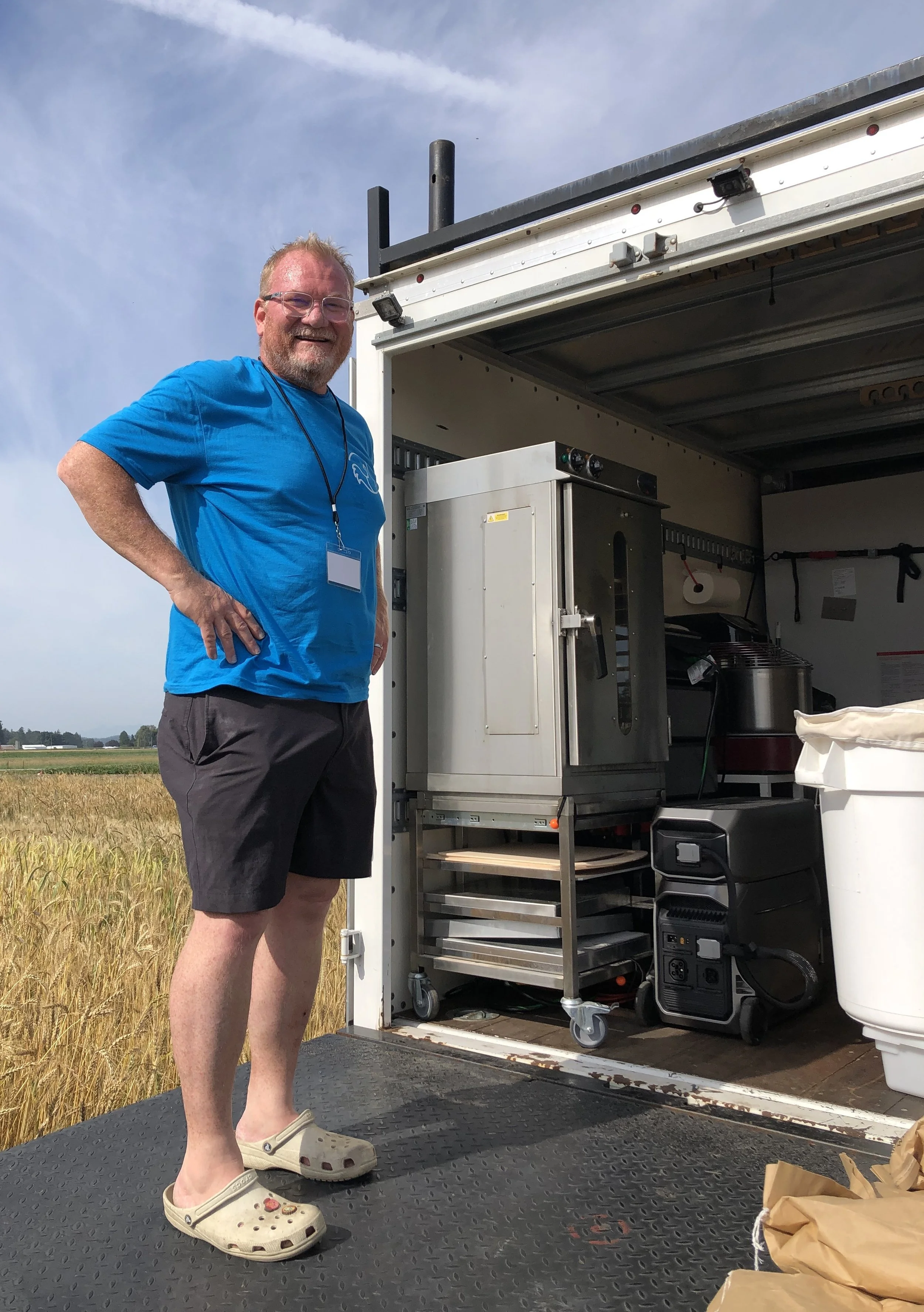
California’s Mark Benoit
Marc Benoit, Red’s Breads: “The key to improving community health and cultural wellbeing is coming together around a common purpose built on trust. My mission is to support small-scale, responsible farmers through daily action who adhere to these values with enhanced, fair pricing for their high-quality produce. Many are starting to mill their own grains which shortens and mends our country’s broken and subsidized supply chains. This kind of support enables companies like Palouse Heritage and Finnriver Farm to provide excellent fresh flour to local bakers.
While my day job is helping head up operations for the world’s largest cyber-security business in the San Francisco Bay area, what keeps me sane is baking bread for local food banks with thousands of loaves each year. I try to take the important story of responsible farming to folks in the city and to audiences like this one farther afield. That’s why I designed and outfitted the solar-powered truck-and-trailer you may have seen parked among the test plots here. It’s equipped with a state-of-the-art stone mill, sifter, bagger, mixer, and oven. Come sample the incredibly flavorful whole grain loaves as we work together for a healthier future.”
Sam Lucy, Bluebird Farms: “Our mission is all about treating the land with respect. Farming is by its nature an invasive, extractive endeavor. But the land—soil—is society’s bank, and consequences good or bad follow the kind of deposits that are made there. Our promise is to improve the bank, and for that reason we rely on top quality farming practices to produce high-quality whole grain food. We’ve had plenty of challenges in the process, but the goal is worthy and keeps us moving ahead.
Agriculture contributes up to a quarter of global greenhouse gases. Regenerative farming practices reduce the carbon footprint so can close that critical loop. But this requires careful attention to crop rotations for soil health and fertility, and for us involve a seven-year cycle. No-till farming practices that depend on herbicides and artificial fertilizers keep the loop open. To improve our shared future means commitment to genuine regenerative agriculture.
In terms of community, ours is our customer base whether those who live close by or in other parts of the country. Our mission is to take care of the land and to satisfy their needs so we listen and learn. We farm organically and raise grains like einkorn and emmer because they are nutritious, and more drought-resistant in this day of climate change. But they are also more expensive to produce organically because there are no farm bill subsidies like commodity growers receive. But there’s no ‘free lunch.’ Customers pay one way or another, and our taxes fund subsidies for large producers. Organic grain production has risen to about 5% so now corporate agriculture is also getting interested. Perhaps government farm policy might someday become part of the solution.”
Legendary Grain Scientist Friends Featured in WSU Mount Vernon Exhibits
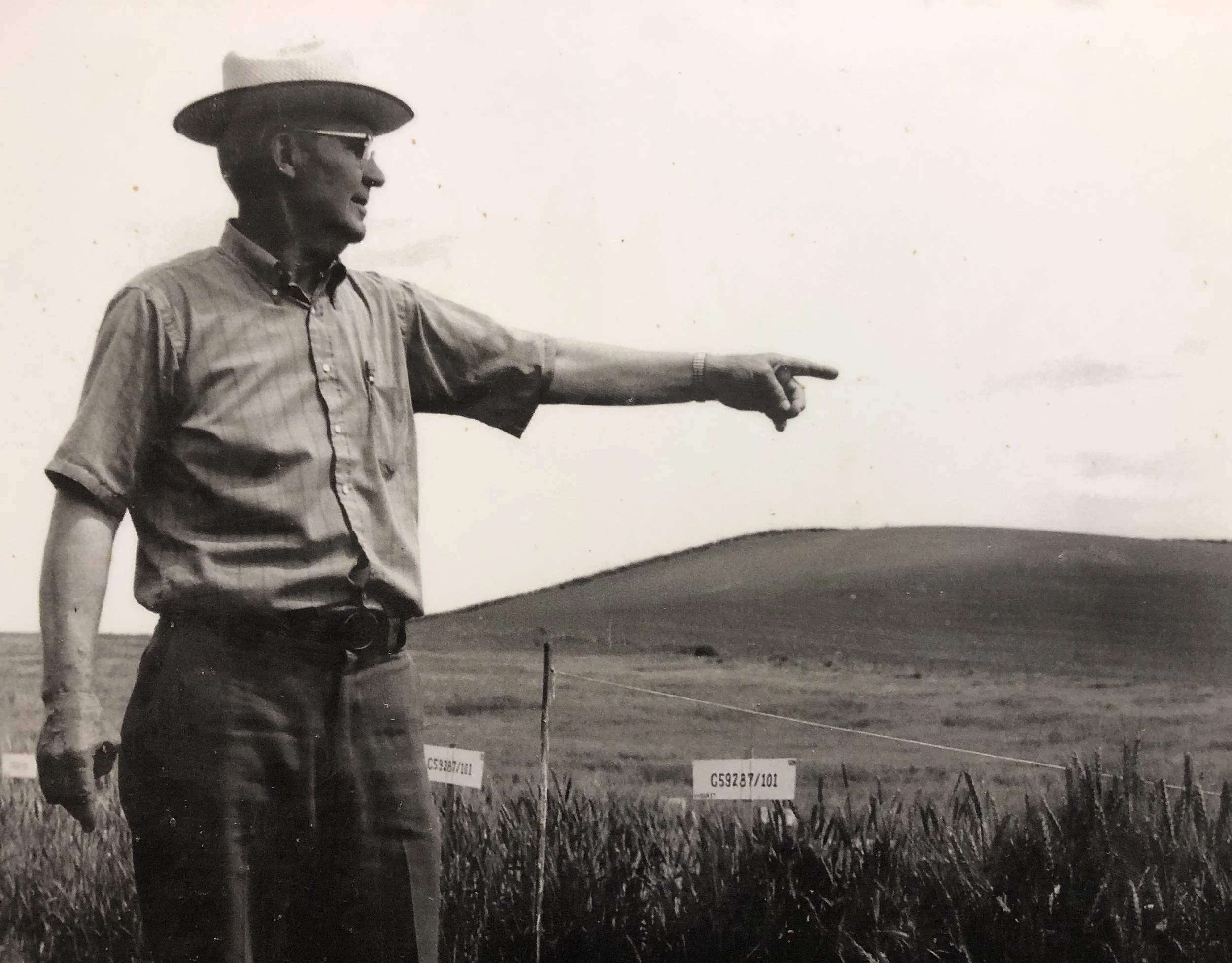
Orville Vogel
Breadlab Founder Stephen Jones
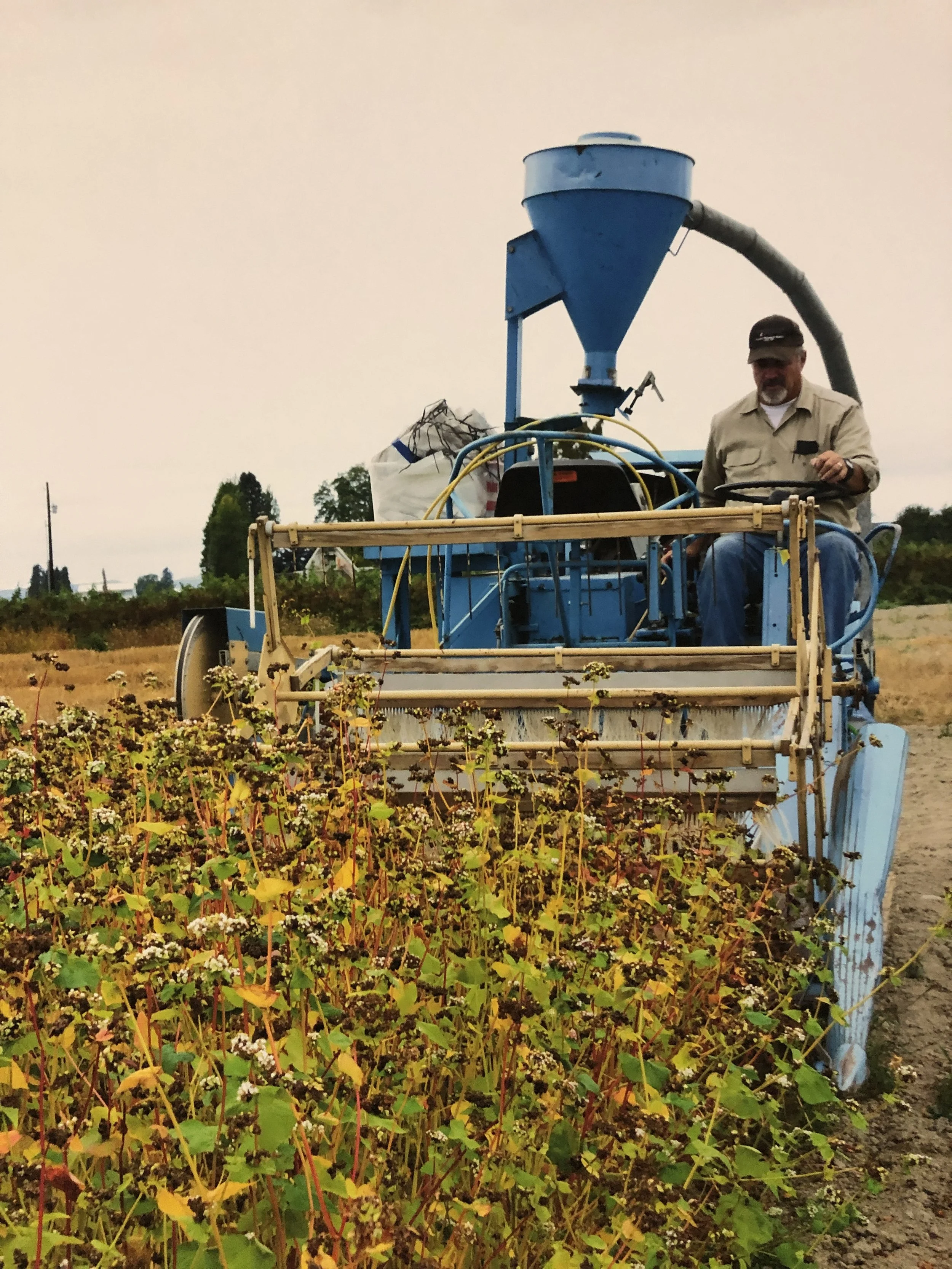
Steve Lyon
After this year’s Grain Gathering wrapped up in the afternoon, Karl and I headed back across the Cascades in time to visit one of our partner growers near Othello. The field was a beautiful stand of the Pacific Northwest’s original grain that we call “Yámas Blue,” which is an ancient English variety brought to the Northwest by Hudson’s Bay Company traders in the 1820s. The afternoon was hot and my thoughts turned to one of the old barns at our Palouse Colony Farm where pioneer families once gathered to thresh wheat by flailing or leading horses over the cut stalks in a slow process known as treading. I had recently encountered Seattle author Paul Hunter’s poem “This Hard Threshing Floor” and considered the pace of harvest change and prospects for the next generation. Grain Gathering presenters like Karl, Marc, Crystie, Keith, and Sam are helping to show the way. I hope folks listen.
uneven worn smooth hoof-scarred
this hard threshing floor
despite gloom and barn litter
underfoot gleams eternally bright
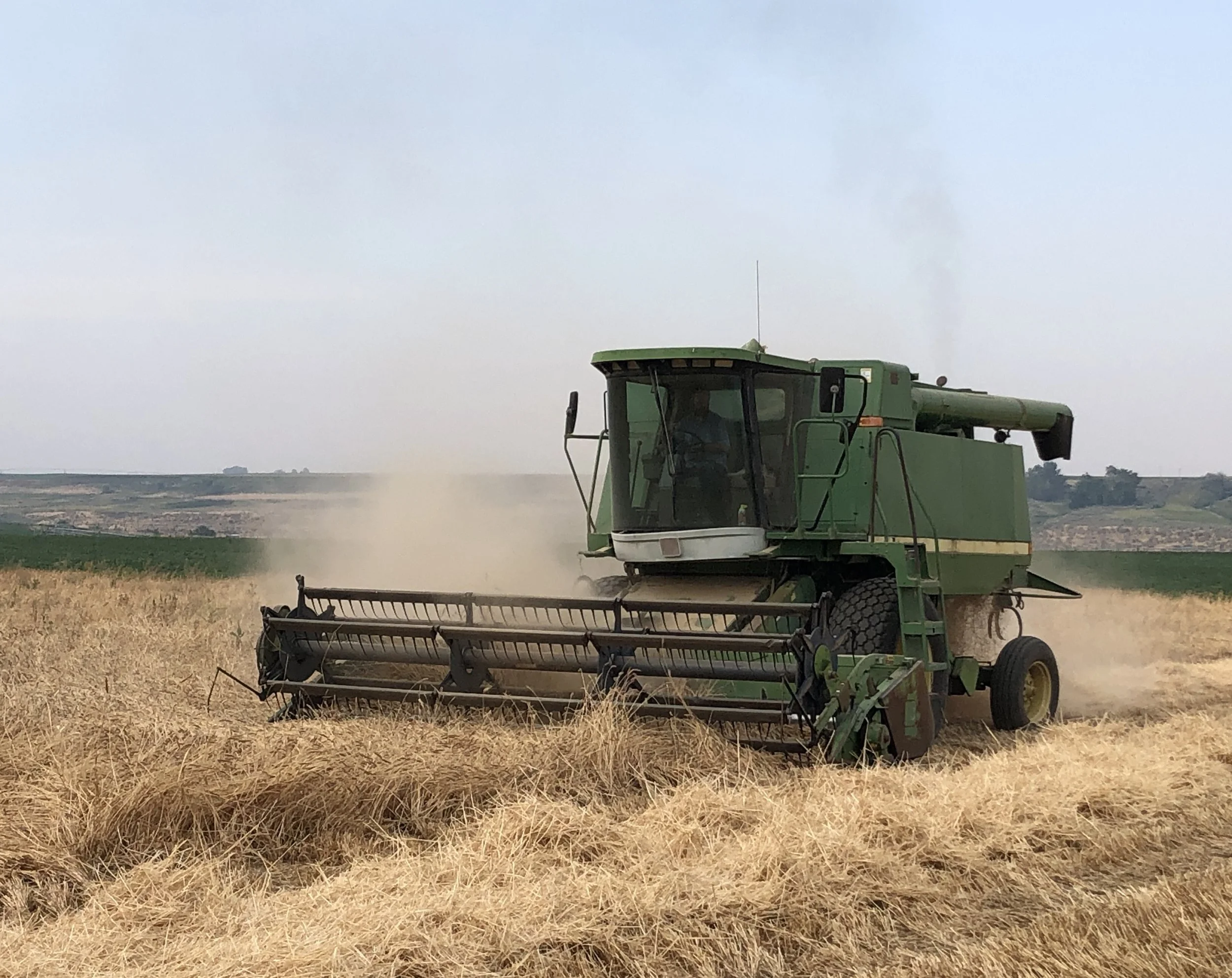
2026 Palouse Heritage “Yámas Blue” Wheat Harvest
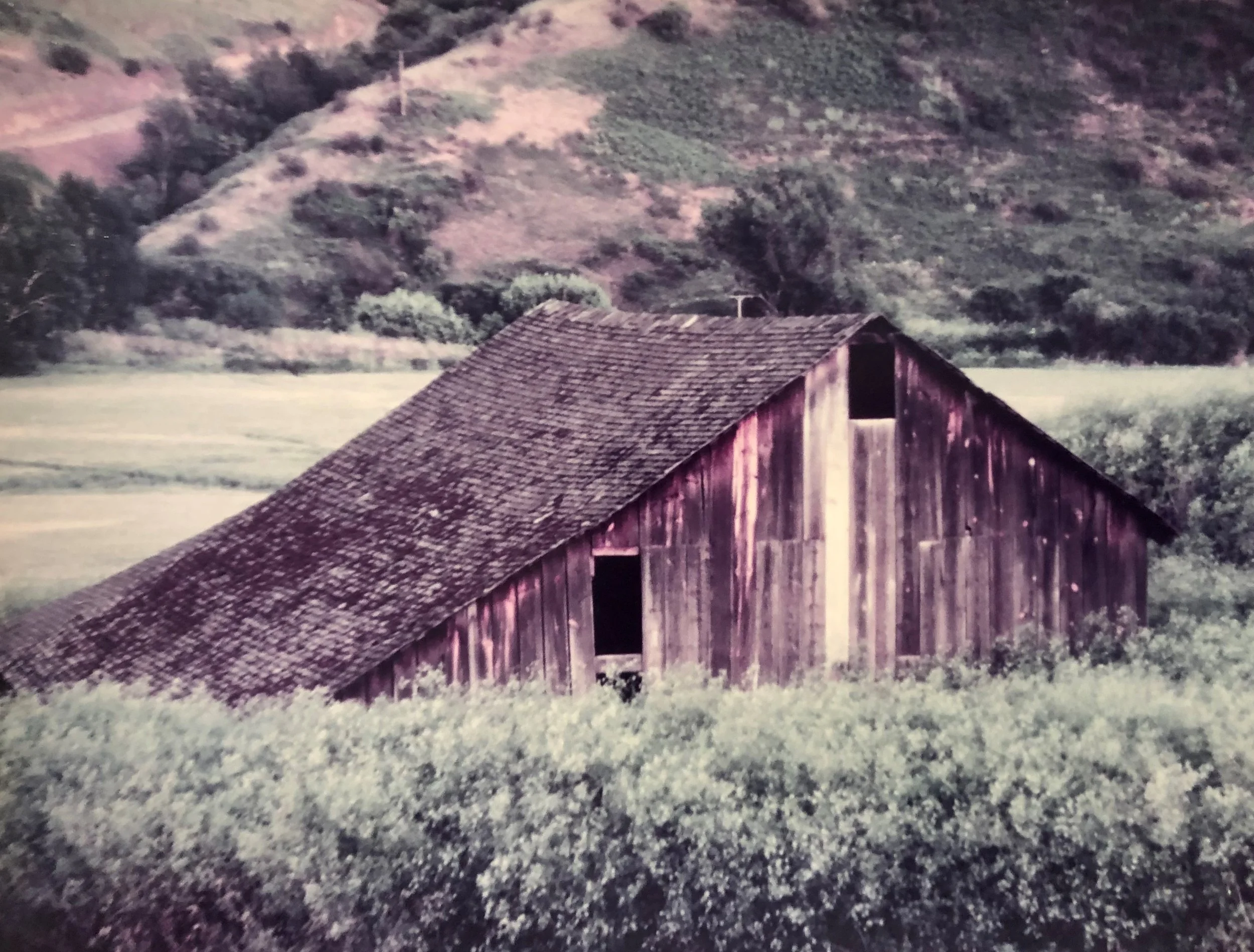
Palouse Colony Barn (built c. 1910)
