
Heritage White Sonora Pie Crust
Best with: White Sonora Wheat
Recipe and story by Rob, a home miller from Pullman, WA
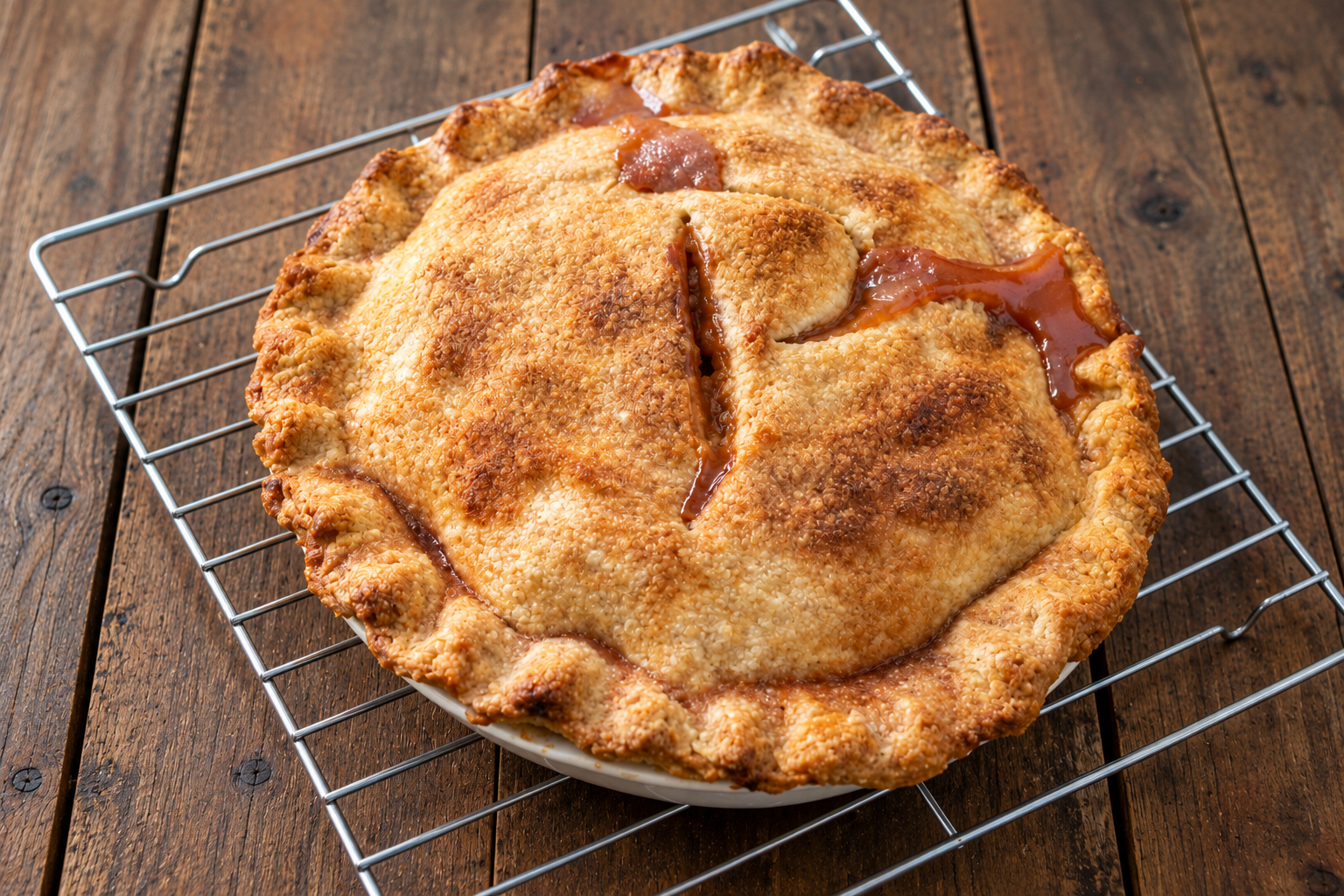
For years, pie crust was a struggle. With commercial white flour I tried every suggestion, even vodka in place of water. But as soon as the dough was worked, even barely enough to combine it, the gluten developed and the crust turned tough. Once I bought a Mockmill grain mill, I started experimenting with soft wheat. That worked much better, though I found I needed to sift out the coarser pieces.
The best solution turned out to be White Sonora soft white wheat. Ground on the finest setting and sifted, it makes a wonderfully fine pastry flour for pie crust, puff pastry, and even cakes. The gluten in White Sonora develops slowly, so the dough can be rolled, folded, and rerolled without becoming tough or elastic. It makes a big difference over other soft white wheats.
I usually make one small pie at a time for me and my wife because I'd rather have pies fresh. The crust uses standard baker's proportions: 3 parts flour, 2 parts fat, and 1 part water, by weight rather than volume.
About the grain
White Sonora is one of the oldest wheats in North America, brought north by Spanish explorers and missionaries into what is now northwestern Mexico and the American Southwest. It is a soft white wheat with a naturally sweet, buttery flavor, a favorite for pastries, pancakes, tortillas, and biscuits.
Making White Sonora pastry flour
Grind White Sonora berries on the finest setting of your mill. Then sift the flour through a 40-mesh sieve. The fine stainless-steel kitchen sieves sold at hardware and kitchenware stores are about 40 mesh and work well.
About 88 to 90% of the flour passes through as fine pastry flour. The 10 to 12% left in the sieve is the bran fraction, a mix of coarser bran flakes and oily bits of germ. (A good idea is to save that bran for heritage grain waffle and pancake batter!)
At a glance
Makes: one small double-crust pie, about 250 g of dough. Rob uses small ceramic pie dishes (Good Cook brand, from WinCo).
Chill: 30 to 40 minutes before rolling, then in the freezer while the oven heats
Bake: 20 minutes at 400°F, then 40 to 60 minutes at 350°F
Crust ingredients
120 g sifted White Sonora pastry flour
10 g sugar
2.4 g salt
30–35 g leaf lard
40–45 g unsalted butter
40–45 g ice water
For a larger pie, keep the same 3:2:1 ratio of flour to fat to water by weight.
Filling ingredients
Rob doesn't measure these. The proportions change with the fruit.
Fresh fruit, enough to fill the dish and heap it up a little
Sugar
Cornstarch or tapioca starch
Ascorbic acid (vitamin C powder)
Cinnamon, allspice, ginger, and just a touch of cloves
A few pats of unsalted butter
A few tablespoons of bourbon: Kirschwasser for cherry pie, Himbeergeist for blueberry pie
For sealing: a slurry of white flour and water
Method
Make the crust
Mix the pastry flour, sugar, and salt.
Cut in the lard with a pastry blender, then cut in the butter.
Weigh in the ice water and blend to form a pie paste. It will weigh about 250 g.
Divide it into two pieces: about 135 g for the bottom crust and about 115 g for the top.
Refrigerate for 30 to 40 minutes.
Roll it out
Roll out the bottom crust on a lightly floured board.
Fold the edges of the circle in toward the center and roll it out again. White Sonora pastry flour develops gluten slowly, so the dough won't toughen. The reroll gives you intact edges that seal well.
Lay the bottom crust in the pie dish. Roll the top crust the same way.
Fill and seal
Mix the sugar, starch, ascorbic acid, and spices into a dry filling mix.
Layer the fruit and the filling mix into the dish, sprinkling the mix over each layer of fruit. Repeat until the dish is full and slightly heaped.
Dot the top with a few pats of butter and add a few tablespoons of bourbon, or the liqueur for your fruit.
Paint a strip of the flour-and-water slurry around the edge of the bottom crust and the edge of the top crust. Lay on the top crust and press to seal. The slurry disappears in baking, but the pie stays sealed.
Bake
Put the assembled pie in the freezer while the oven heats to 400°F. This firms the crust so it doesn't sag in the heat.
Set the pie on a metal pan to catch drips and bake at 400°F for 20 minutes.
Turn the oven down to 350°F and bake until the pie is bubbling on top and the juices have thickened, usually another 40 to 60 minutes. For a well-browned crust, go toward the longer time.
Notes
Adjusting the filling by fruit: for peach, less sugar and more thickener; for apple, more sugar, less thickener, and more cinnamon; for cherry and blueberry, keep the spices to a minimum.
Leaf lard: Rob renders his own snow-white lard from leaf lard bought from local growers of pastured pigs.
Pastry blender: Rob uses his mother's old hand pastry blender. It's older than he is, though he did have to replace the wooden handle.
Why White Sonora: because its gluten develops slowly, you can fold and reroll the dough without it turning tough or elastic, something most flours won't tolerate.
