
The True Cost of Bread
Bread is one of the most familiar foods on our table. It’s simple, comforting, and seemingly inexpensive. A quick trip to the grocery store might suggest that bread is one of the cheapest staples you can buy. But when you look a little closer, the real cost of bread goes far beyond the price printed on the bag.
At Palouse Heritage, we believe it’s worth asking: what are you truly paying for when you buy bread, and what do you gain when you bake it yourself?
The Price Tag: Store-Bought vs. Home-Baked
At first glance, store-bought bread often seems like the more affordable option.
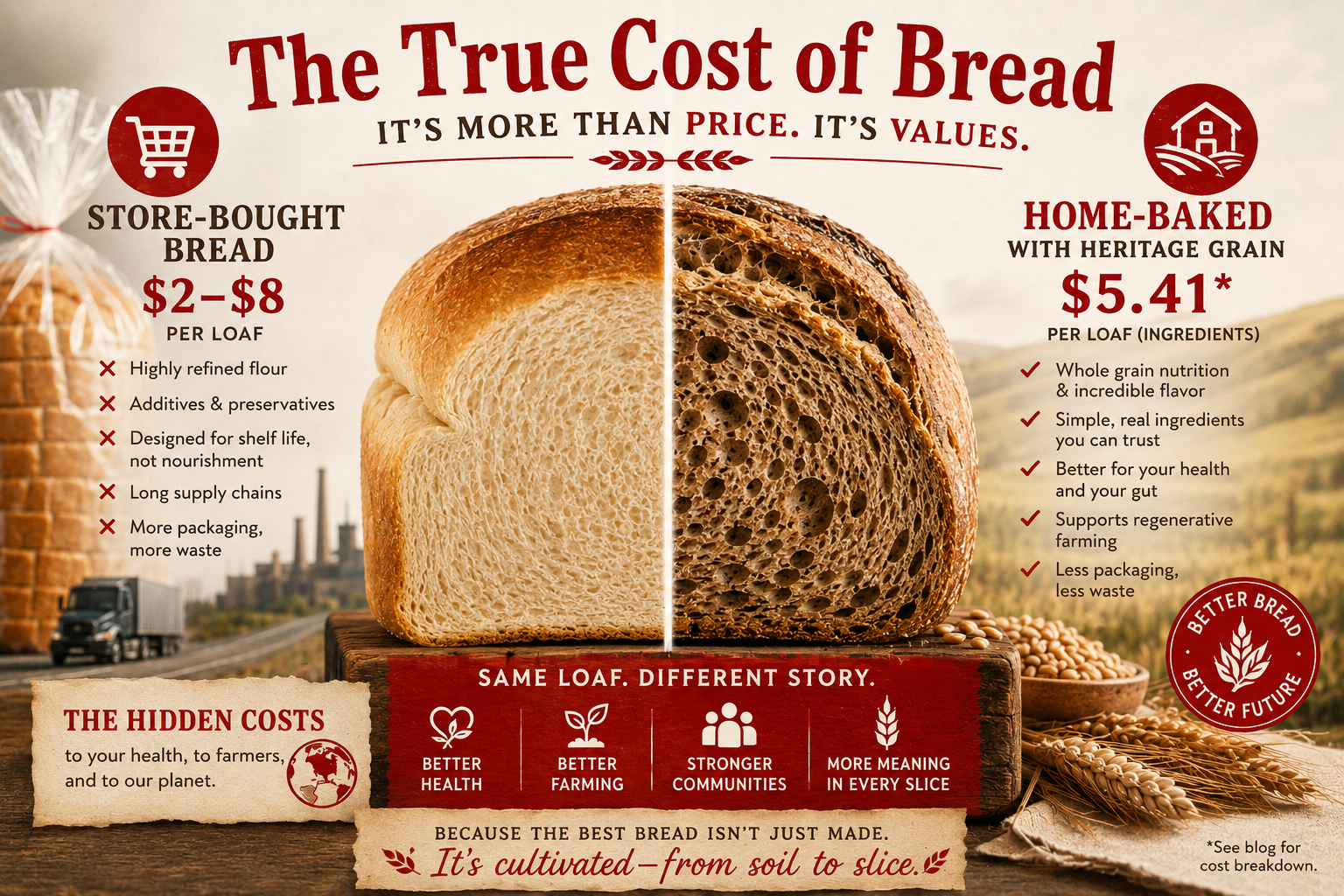
A typical loaf of conventional sandwich bread might cost anywhere from $2 to $4. “Artisan-style” loaves at the grocery store are a bit more, often landing between $5 and $8.
Compare that to baking at home using heritage flour:
A loaf of homemade bread using Palouse Heritage flour typically costs between $5 and $6 in ingredients, depending on the recipe.
The yield is often higher, with many home recipes producing larger, denser, more satisfying loaves.
Staples like flour, yeast, and salt stretch across multiple batches, lowering the per-loaf cost over time.
While the upfront investment in quality grain/flour may appear higher, the long-term cost per loaf of home-baked bread is surprisingly competitive, and often lower. And that’s not even accounting for its whole-grain nutritional and flavor benefits.
Beyond the Price Tag: What Store-Bought Bread Really Costs
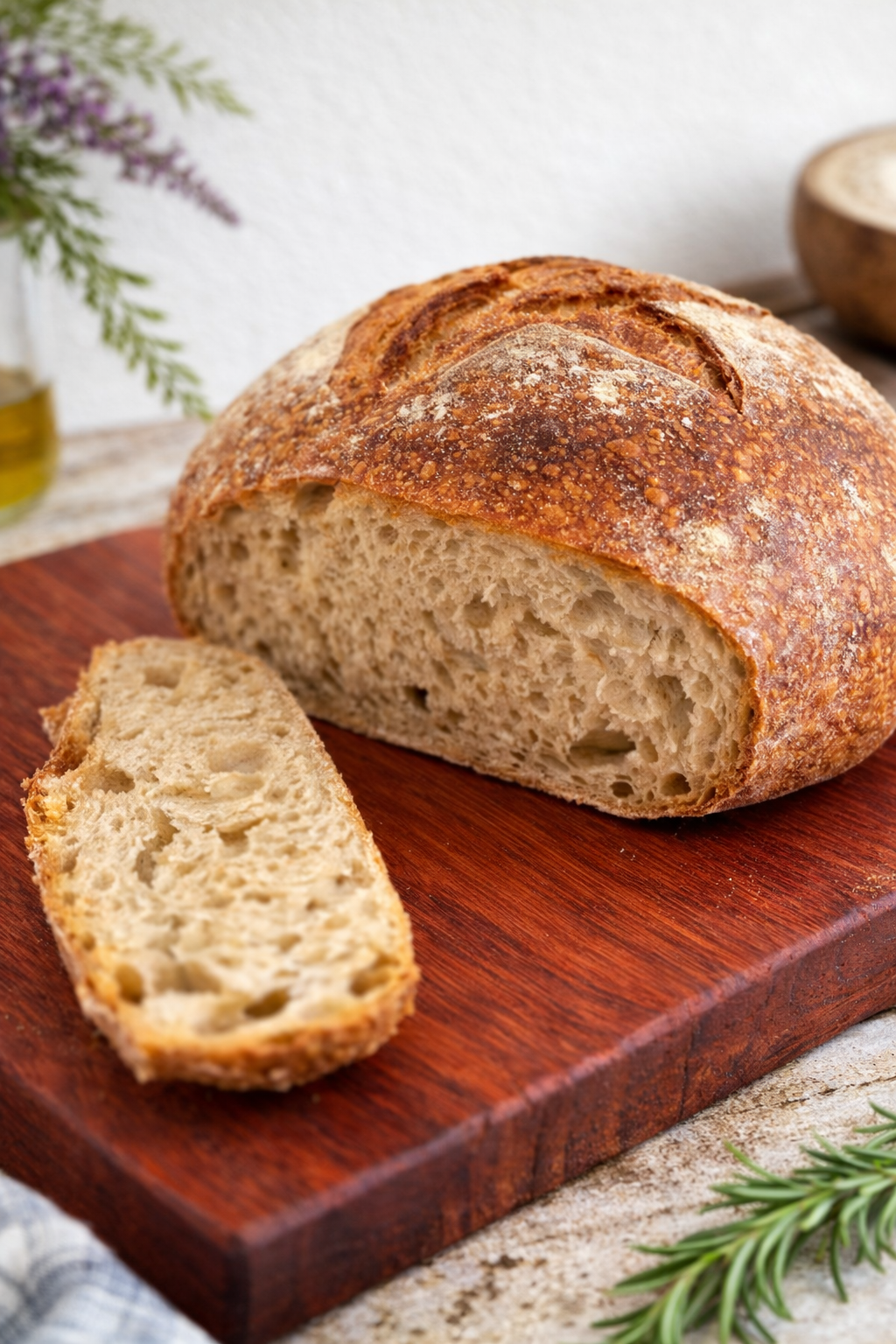
This loaf was baked with fresh-milled Palouse Heritage English Redhead wheat. Ingredient cost: approximately $5. Flavor, freshness, and connection to the farm: harder to measure, but much higher than what you typically get from the grocery store!
The price on the shelf doesn’t tell the full story. Commercial bread production prioritizes speed, shelf life, and uniformity. To achieve this, many commercial loaves include:
Highly refined flours stripped of nutrients
Additives and preservatives to extend shelf life
Dough conditioners to accelerate production
Sugars and oils to enhance flavor and texture
These shortcuts reduce production costs, but they also reduce nutritional value and transparency.
There are also environmental costs to consider:
Industrial agriculture practices that prioritize yield over soil health
Long supply chains with transportation and packaging impacts that are harmful to the environment
Food waste from bread designed to last longer than it nourishes
The Value of Baking at Home
When you bake your own bread, you’re choosing something fundamentally different.
You control every ingredient. With heritage grains, you’re working with flour that retains more of its natural character, including flavor, nutrition, and integrity.
Health benefits often include:
Greater nutrient density from less-refined flour
Improved digestibility, especially with longer fermentation methods
Fewer additives and no unnecessary preservatives
There’s also a deeper environmental benefit:
Supporting regenerative farming practices through heritage grain sourcing
Reducing packaging waste
Minimizing food miles by sourcing directly from farms like ours
A Simple Comparison
Consider two loaves:
A $5 grocery store artisan-style loaf may last longer on the shelf, but many commercially produced artisan loaves are designed for consistency and shelf life, often relying on additive ingredients and long supply chains that differ significantly from a loaf baked fresh at home.
A homemade loaf made with fresh-milled Palouse Heritage grain flour can be made for only about $5.41, delivering richer flavor, better nutrition, and a direct connection to the land it came from, while supporting farmers committed to soil health and sustainability. Here is the specific cost breakdown, using our Basic Fresh Milled Heritage Grain Bread recipe for example purposes and grocery store pricing research:
A 20-lb bag of Palouse Heritage Turkey Red grain currently costs $49.95, or about $2.50 per pound. For the 600g (1.32 lbs) called for in this recipe, the grain cost is about $3.30.
$0.97 for 73 g olive oil
$0.88 for 73 g of honey
$0.02 for 2 tsp of salt
$0.05 for 1 tsp vital wheat gluten
$0.15 for 1 tbsp of yeast
$0.04 for 1/8 tsp of vitamin c powder
That’s a total cost of $5.41. But the difference isn’t just in cost, it’s in value. Of course, ingredient cost is only part of the equation. Baking bread requires time and attention. Yet many home bakers find that the process itself becomes part of the reward. It’s a practical skill, a creative outlet, and a meaningful connection to the food they eat.
Bread as an Investment
Baking bread at home does require time and intention. But many of our customers find that what starts as a practical choice becomes something more meaningful.
It becomes:
A way to reconnect with food and process
A creative, grounding ritual
A healthier staple for your household
A small but impactful way to support better agriculture
When you look at bread through this lens, the question shifts. It’s no longer “Which loaf is cheaper?” but rather, “What is this bread giving back with all factors in perspective?”
Choosing Better Bread
At Palouse Heritage, we believe bread should nourish more than just hunger. It should support your health, your community, and the land it comes from.
Whether you’re baking your first loaf or your hundredth, choosing heritage flour is a step toward bread that truly costs less in the ways that matter most, and gives far more in return.
Because every loaf tells a story. The question is whether that story begins with industrial efficiency, or with healthy soil, thoughtful farming, and grain grown with purpose.
We encourage you to consider using our heritage grains and recipes for milling and baking your own loaf at home!
